













BYD's autonomy stack is quietly the most interesting in the industry
Nobody talks about God's Eye. They should. It's the only L2++ system that ships in a $20,000 car.
Yair Knijn
Founder & editor-in-chief
- BYD
- China
- God's Eye
- perception
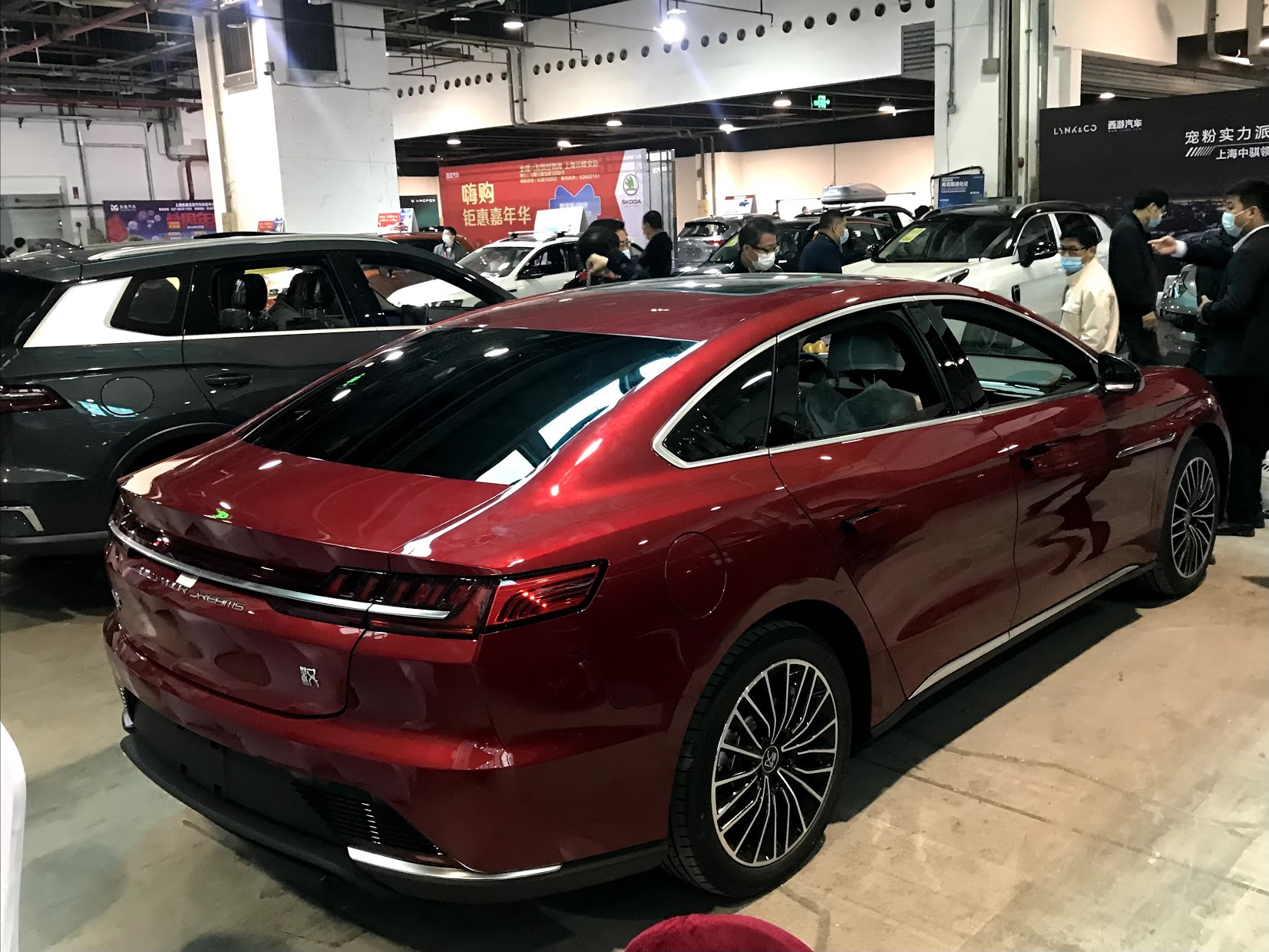
BYD does not market its autonomy system the way Tesla markets FSD. There are no investor calls about robotaxis, no on-stage demos with the founder asleep in the driver seat, no rolling four-month delays on a feature announced at a hardware event. There is, instead, an engineering team that quietly ships, a sticker on the car that mentions “天神之眼”, God’s Eye, and a price point that is starting to define what driver-assistance can be in the volume segment.
The system comes in three tiers. The base tier, lidar-free, camera and radar only, ships on cars under the equivalent of $20,000 USD. The middle tier adds a single roof-mounted lidar. The top tier adds three. The software stack is the same; what changes is the sensor envelope and the operational design domain.
This is the most aggressive deployment of structured autonomy product tiering in the industry, and it is happening at a price point where every other manufacturer has decided active driver assistance is not viable.
What God’s Eye actually does
The feature set on the middle tier is, broadly, what FSD does on a US highway. Lane keeping, adaptive cruise, automated lane change, automated overtaking, navigation-on-autopilot for highway driving with on- and off-ramp handling. The top tier extends this to urban driving in the mapped cities, currently Shenzhen, Shanghai, Beijing, Guangzhou, with expansion at the rate of a city every few months.
The performance gap to Tesla FSD in the urban domain is real and BYD is not pretending otherwise. The performance gap to every other Chinese manufacturer in the volume segment is also real and BYD is not pretending otherwise. XPeng is the technical leader on a per-vehicle basis. NIO has the better hardware. Li Auto has the better hands-free experience on mapped highways. BYD has the volumes, and volumes turn into training data, and training data turns into the next year’s update.
The bill of materials story
The lidar on the middle tier costs BYD, by reasonable industry estimates, somewhere between $300 and $500. The radar suite is conventional. The cameras are conventional. The compute is a domestic Chinese SoC that performs at roughly Hardware 3 levels per watt. There is no Nvidia in the stack. There is no Mobileye in the stack. Every meaningful component is either built in-house or sourced from a Chinese Tier-1 that BYD has a strategic relationship with.
The bill of materials adds up, on the available teardowns, to a number that makes the system economical on a $20,000 car. There is no other manufacturer in the world for whom that is currently true.
Why this matters
Two reasons.
First, the export story. BYD is now selling cars in fifty-some countries, including most of Europe, much of Latin America, and a growing chunk of Southeast Asia. The God’s Eye system goes with them. The regulatory work to certify it for European type approval is in progress. When it lands, on a $25,000 car in Berlin or Madrid, the conversation about what driver-assistance costs changes.
Second, the floor it sets. Every manufacturer of a vehicle in the $20,000-$35,000 segment now has to decide whether they ship an L2++ system at that price or compete with one that does. The legacy answer, “that’s a premium feature”, does not survive a competitor putting it on the base trim of a small crossover.
The system that nobody in the US has driven is the system that, within three years, will define what driver-assistance is expected to cost.

Comments
Closed.
Comments close 30 days after a piece runs. The thread on this one is locked.
Tips and corrections still welcome at tips@autonomy-ev.com.