













BYD's Denza Z9GT Hit 97% in 12 Minutes at -22°C. The Cold-Weather Excuse Is Shrinking
If BYD's deep-freeze charging numbers hold up outside a controlled test, the winter-range argument against EVs gets a lot weaker this decade.
Yair Knijn
Founder & editor-in-chief
- BYD
- Denza
- fast charging
- batteries
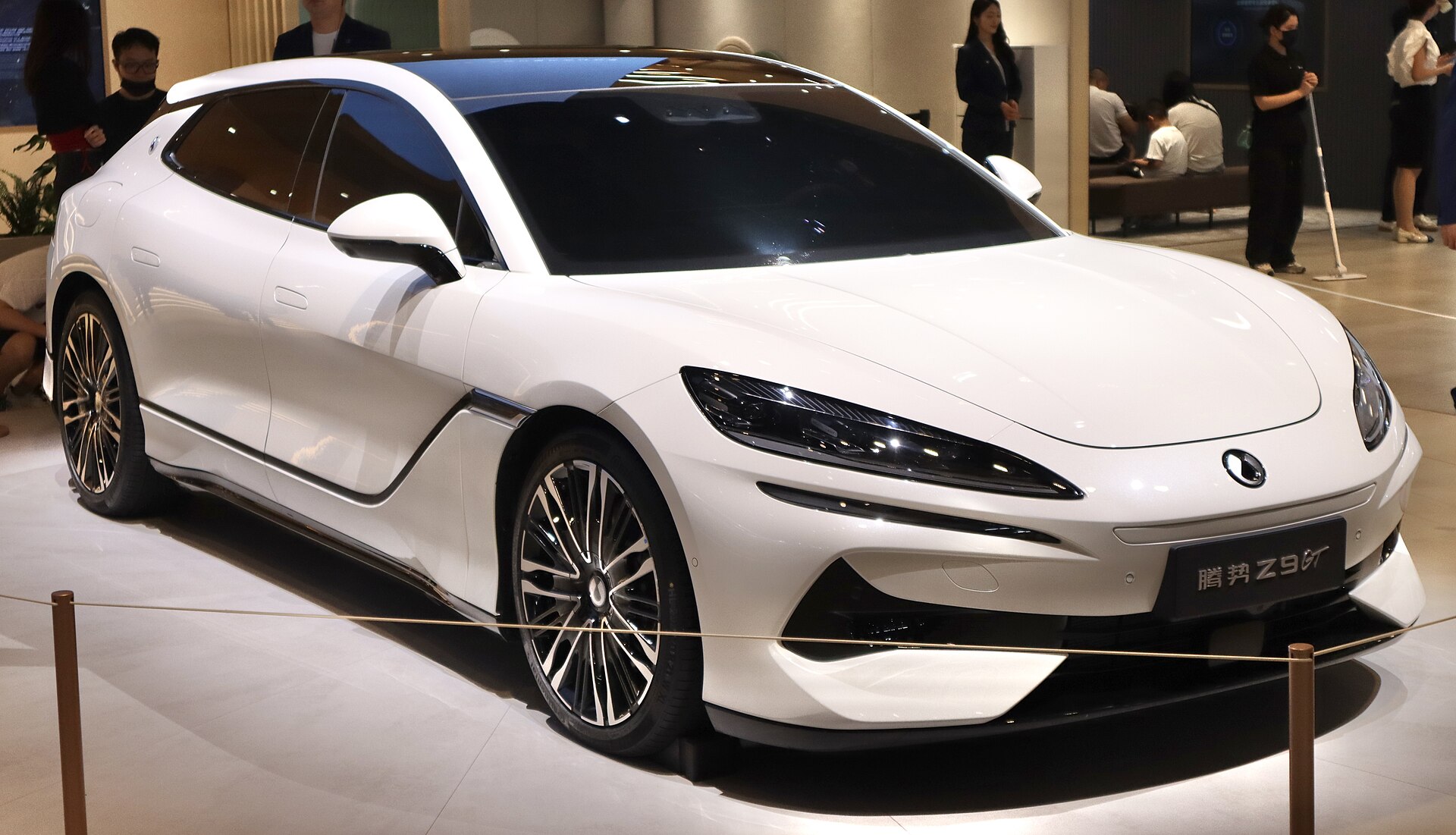
Cold kills charging speed. Lithium plates onto the anode, internal resistance spikes, and the BMS throttles current to protect the pack. Anyone who has watched a Model 3 crawl at 70 kW on a January Supercharger knows the drill. That is the context for the latest stunt out of Shenzhen, and why it is worth paying attention to instead of rolling your eyes.
What BYD actually claims
According to InsideEVs, BYD soaked a Denza Z9GT at -22°C (-7.6°F) for an extended period, then ran a charge session that took the pack to 97% in about 12 minutes. The car uses BYD's second-generation Blade Battery riding on the Super e-Platform that BYD unveiled in March 2025, which the company rates at 1,000 kW peak DC and a 1,000 V architecture.
A few things to keep in mind before anyone declares winter solved. The test was a BYD demonstration, without independent lab verification. We do not have a public charging curve, only the headline number. And hitting 97% that fast at that temperature implies aggressive pack preconditioning, which itself consumes energy that does not show up in the 12-minute figure.
Why this still matters
Even with those caveats, the direction matters. The industry baseline for cold-weather DC fast charging is grim: most production EVs in 2024 lost 30 to 40% of peak charging rate below freezing without aggressive preconditioning, and many owners never trigger preconditioning correctly. If BYD can deliver anything close to these numbers in customer hands, the practical winter gap between an EV and a gas car narrows to the time it takes to walk inside and use the bathroom.
It also reframes the infrastructure conversation. A 1,000 kW session pulled by a single car is a serious grid event. Stations capable of sustaining that across multiple stalls will need buffer storage, plus bigger transformers. BYD has been quietly building exactly that in China, pairing Super e-Platform stalls with on-site batteries. Western operators have not, which is the gap that should worry Electrify America and Ionity more than the raw kilowatts.
AutonomyEV's opinion
Take the 12-minute figure as a ceiling, not a typical experience. Real owners in Norway or Minnesota will see slower curves, more conservative BMS behavior, and stations that cannot deliver full platform power. That is fine. The interesting claim is the cold-weather resilience of the second-generation Blade chemistry, more than the peak number itself. If BYD publishes a charge curve with temperature, voltage, and current logged second by second, this becomes a real engineering milestone. Until then it is a marketing event with a plausible technical basis.
The other shoe to watch is when, or whether, the Super e-Platform shows up outside China. BYD has been cautious about exporting its highest-end tech, and tariff walls in the US and EU make Z9GT-class hardware unlikely to land at Western dealers anytime soon. The pressure it puts on Hyundai, Porsche, and the Chinese export brands is real regardless.

Comments
Closed.
Comments close 30 days after a piece runs. The thread on this one is locked.
Tips and corrections still welcome at tips@autonomy-ev.com.