













China's 'kill-them-all' drone algorithm has nothing to do with self-driving cars
HG-STR is a combat targeting system for fixed-wing drone swarms, and conflating it with civilian road autonomy gets both the engineering and the policy wrong.
Yair Knijn
Founder & editor-in-chief
- china
- autonomy
- policy
- drones
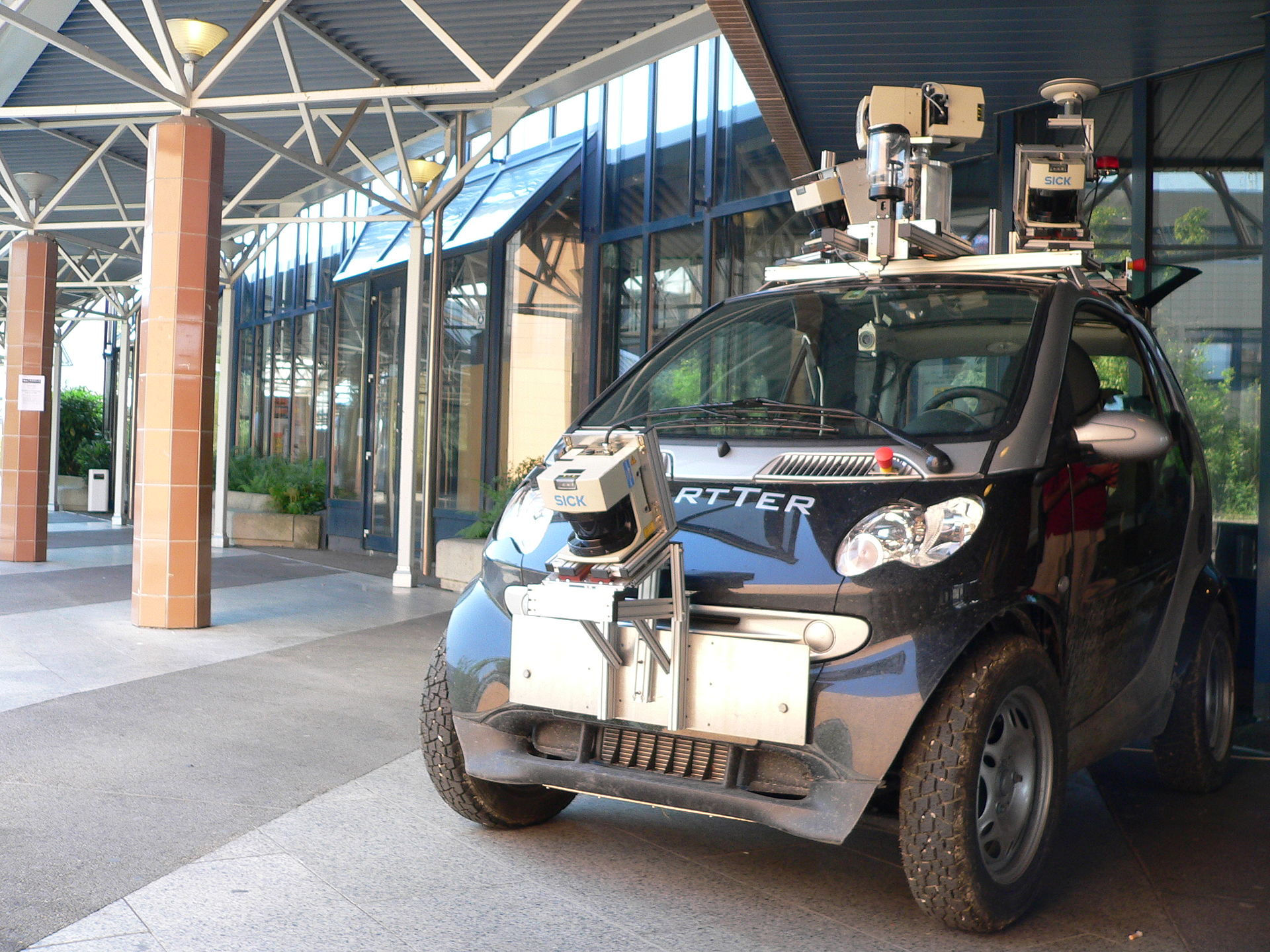
A defense paper out of China is being passed around autonomy circles this week, and it should not be. Before anyone files it under "China's AV stack is pulling ahead," read what the work actually does.
What HG-STR actually does
Per the South China Morning Post, a research team in northwestern China published HG-STR (Heterogeneous Graph Spatio-Temporal Reasoning), an algorithm that lets fixed-wing drone swarms search a battlefield and engage targets even when communications are jammed and onboard vision is degraded. The headline claim is a 100% elimination rate in simulation against mobile ground targets. That is a combat coordination and target assignment problem. It is not a driving problem.
Why it does not transfer to road autonomy
Combat swarm autonomy and road autonomy share vocabulary and almost no constraints. A military drone is allowed to act on partial information, accept failure modes that are incompatible with civilian use, and treat its operating environment as adversarial by design. A robotaxi cannot. SAE J3016 frames the driving task around rules of the road, vulnerable road users, and human occupants. Waymo's public safety methodology counts every disengagement, contact event, and near miss as a reportable failure, which is the opposite optimization target from "100% kill."
The sensing problem is different too. Fixed-wing drones at altitude move through mostly empty 3D space at high speed, with sparse, high-value contacts. Urban AVs operate in dense, occluded 2D ground space at low speed, with pedestrians moving unpredictably within three meters of the bumper. Graph reasoning over distant aerial contacts under jamming is a worthwhile research problem. It is not the same problem as predicting whether a child will step off a curb in front of a Robotaxi at a four-way stop.
AutonomyEV's opinion
Expect HG-STR to get cited in two unhelpful places. The first is investor decks arguing China's civilian AV stack is leaping ahead because of military AI crossover. The second is policy briefs arguing civilian autonomy software needs new export controls because it is dual-use with combat systems. Both arguments are weak in the same way. The hard parts of L4 road autonomy (long-tail verification, homologation, insurance liability, occupant protection) are not what HG-STR solves. The hard parts of combat swarm autonomy (jamming-tolerant fusion, target assignment, attritable loss budgets) are not what a robotaxi or a private EV needs.
If you want a real read on where Chinese road autonomy is going, watch the MIIT L3 pilot rollout and the operating data coming out of robotaxi zones in Beijing Yizhuang and Wuhan. A defense paper out of Shaanxi tells you very little about either.


Comments
Closed.
Comments close 30 days after a piece runs. The thread on this one is locked.
Tips and corrections still welcome at tips@autonomy-ev.com.