













Do Americans Want Chinese EVs? The Tariff Wall Makes It a Hypothetical
An online debate asked what BYD and Xiaomi offer beyond cheap labor. The honest answer runs through vertical integration, faster product cycles, and free driver assistance, well past $4-an-hour wages behind a tariff wall.
Yair Knijn
Founder & editor-in-chief
- BYD
- Xiaomi
- tariffs
- China
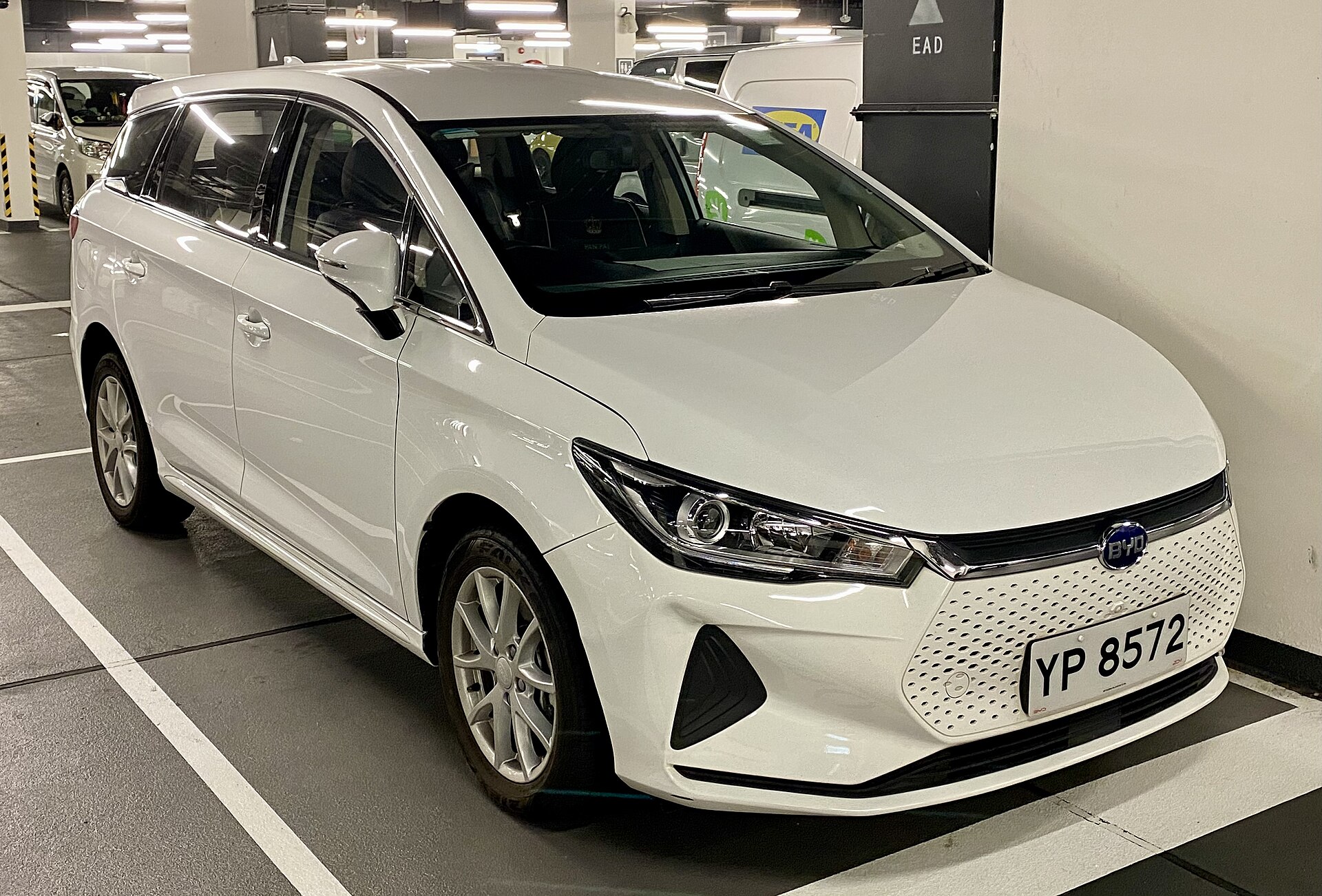
A question circulating online this week asked what BYD and Xiaomi actually offer beyond cheap labor. The premise was that price explains everything, and that wages around $4 an hour are the whole story. That framing is weak, and it matters because trade policy in Washington and Brussels is often argued on those terms.
The price gap is real, the tariff wall is bigger
Americans are unlikely to buy a Chinese EV at retail anytime soon. The Office of the U.S. Trade Representative finalized a 100% Section 301 tariff on Chinese EVs in September 2024, effective September 27. The European Commission added countervailing duties of up to 35.3% on Chinese battery-electric vehicles in October 2024, on top of the standard 10% import duty. Whatever a BYD Seagull costs to build in Shenzhen, it will not land in Los Angeles at that price.
So the online debate really splits into two questions. Are these cars cheap mainly because labor is cheap? Are they competitive for reasons that have little to do with hourly wages?
What BYD and Xiaomi actually built
Labor is a relatively small line item in a modern EV. The larger story is vertical integration. BYD makes its own cells, power electronics, and motors. Its Blade pack is a cell-to-pack structural LFP design that BYD markets as Cell-to-Body. BYD licenses that pack technology to BorgWarner, a supplier to Ford and GM, and supplies Toyota for some China-market programs. Owning the chemistry and pack architecture helps explain how BYD hits aggressive price points while staying profitable.
On driver assistance, BYD moved faster than most Western OEMs on bundling. In February 2025 it made its God's Eye ADAS standard across its range at no extra charge, including cars under $10,000 such as the Seagull. Tesla and Ford still treat comparable systems as paid options or subscriptions. BYD treated the feature as table stakes.
Xiaomi is a different case. The SU7 launched at 215,900 yuan, roughly 30,000 yuan below the Tesla Model 3 in China. Ford CEO Jim Farley borrowed an SU7 for an extended test, flying one from Shanghai to Chicago and driving it for six months. He said he does not want to give it up. That is a sitting Detroit CEO speaking plainly about a Chinese rival's hardware and software stack.
AutonomyEV's opinion
No first-world OEM can replicate $4-an-hour assembly costs. Labor alone does not explain the competitiveness gap. Vertical integration, shorter product cycles, and free ADAS rollout matter more. Tariffs buy Detroit and Wolfsburg time, perhaps five years. If that window goes to lobbying for higher barriers instead of rebuilding supply chains and dropping driver-assistance paywalls, the tariff wall will erode. Farley already seems to understand this. The open question is whether his board and peers will act on it.

Comments
Closed.
Comments close 30 days after a piece runs. The thread on this one is locked.
Tips and corrections still welcome at tips@autonomy-ev.com.