













Europe is regulating as if the human were the safe default
The EU has spent years circling whether assisted driving should be allowed to exist. While it circles, the machines are already driving, just not here. A look at the gap between Europe's caution and the road it is meant to protect.
Yair Knijn
Founder & editor-in-chief
- EU
- regulation
- Level 2
- FSD
- road safety
An EU working group met again this week to talk about DCAS, Driver Control Assistance Systems, the UNECE category (UN Regulation 171) that covers Level 2 assisted driving. It had a study in front of it, the kind of evidence it has spent years asking for. It threw the study out, because the test subjects were too young to be representative. Then it agreed the rules could stay as they are, and moved on.
That is the posture in a single meeting. Europe treats the human driver as the safe default and the machine as the suspect that has to earn its way onto the road. It has the order backwards, and the cost of getting it backwards is paid on the road every day while the committee waits for a better study.
This is a long argument about a slow process, so it is worth saying the conclusion first. The technology is already good enough to be measured against the thing it replaces. The thing it replaces is the most dangerous part of the system. Europe has built a process whose default answer is wait, and wait is not a neutral choice. It has a body count.
The meeting that has been happening for years
The worry the group keeps circling is real, and it deserves to be stated at full strength before it is argued with. Lisanne Bainbridge named it in 1983 in a paper called “Ironies of Automation.” Automate the easy, routine part of a task and you do not relieve the human, you demote them to a monitor, and you hand them the one job people are worst at: staying alert to a process that almost never needs them, so they can intervene in the rare second when it does. She put a number on the limit. It is, she wrote, “impossible for even a highly motivated human being to maintain effective visual attention towards a source of information on which very little happens, for more than about half an hour.” A Level 2 system that drives competently for an hour is asking its supervisor to do exactly the impossible thing.
So the group is right that supervised automation has a vigilance problem. Where it goes wrong is in treating that problem as a reason to keep studying rather than as a reason to deploy carefully and measure what actually happens. Every meeting reaches for more evidence and then finds a reason the evidence does not yet count.
This week’s meeting was a clean example. The group had commissioned a driving simulation, got the results, and set them aside because the test subjects were young and therefore not representative of the wider driving population. Read that twice. After years of asking for data, data arrived, and the response was that the sample was the wrong age. The methodological point is fair on its own terms. As a pattern it is the bureaucratic reflex in miniature: request evidence, receive evidence, identify why this particular evidence does not settle the question, and return to the starting line a few months older.
The rest of the agenda told the same story. The European Transport Safety Council had sent a letter that, on the surface, read like an attempt to slow the approval machinery. Under questioning from the Chair it turned out to be about getting stakeholder feedback better reflected in the process, rather than changing the rules. ETSC warned that new concepts such as “hands-near” operation, a mode somewhere between hands on the wheel and fully hands-off, could be approved in the EU before they had been fully thrashed out at the UNECE level, opening a gap between the two regimes. France proposed pausing further regulatory work until EU-level decisions were settled. Norway worried aloud that the driver monitor, the camera or sensor that checks whether the supervisor is supervising, could be fooled. Everyone agreed that the ACV subgroup was a perfectly good forum in which to keep discussing all of this.
The single concrete outcome was that Article 39, the exemption that lets any of this technology onto European roads at all, would stay. Nothing else moved. No deployment was authorised, no study was accepted, no deadline was set. A meeting that produces only the survival of the one thing already working is not a decision. It is a deferral wearing the clothes of diligence.
The machines are already driving, just not here
While Europe meets, the cars drive. The most useful thing a European reader can do is look at where the technology has actually shipped, because the contrast with the committee room is the whole argument.
Germany had the genuine achievement, and the tense matters. Mercedes Drive Pilot was the first Level 3 system approved for European roads, certified by the federal motor transport authority to take over the driving itself, hands off and eyes off, within its operating conditions. A December 2024 upgrade let it run at up to 95 km/h (that is 59 mph, for our American friends, and yes, the rest of this piece is in honest kilometres) across the entire German Autobahn network. It was real, liability-shifting, eyes-off driving you could buy. It was also strikingly narrow: a couple of luxury models, German motorways only, a speed cap well below the traffic around it.
Then, in early 2026, Mercedes paused it. The facelifted S-Class arrives without Drive Pilot, the eyes-off feature dropped in favour of a Level 2++ system, MB.Drive Assist Pro, that keeps the driver’s eyes on the road. BMW abandoned its rival Level 3 Personal Pilot at about the same time, swapping it for a roughly 1,450-euro Level 2++ option. Both blamed thin demand and the cost of the lidar the eyes-off mode needed. So Europe built the world’s most careful Level 3 car, boxed it in until almost nobody bought it, and then watched its own makers retreat to the supervised Level 2 category the regulators are still agonising over. The flagship did not fail because the technology could not do the job. It failed because the rules left it so little room that it was not worth the price.
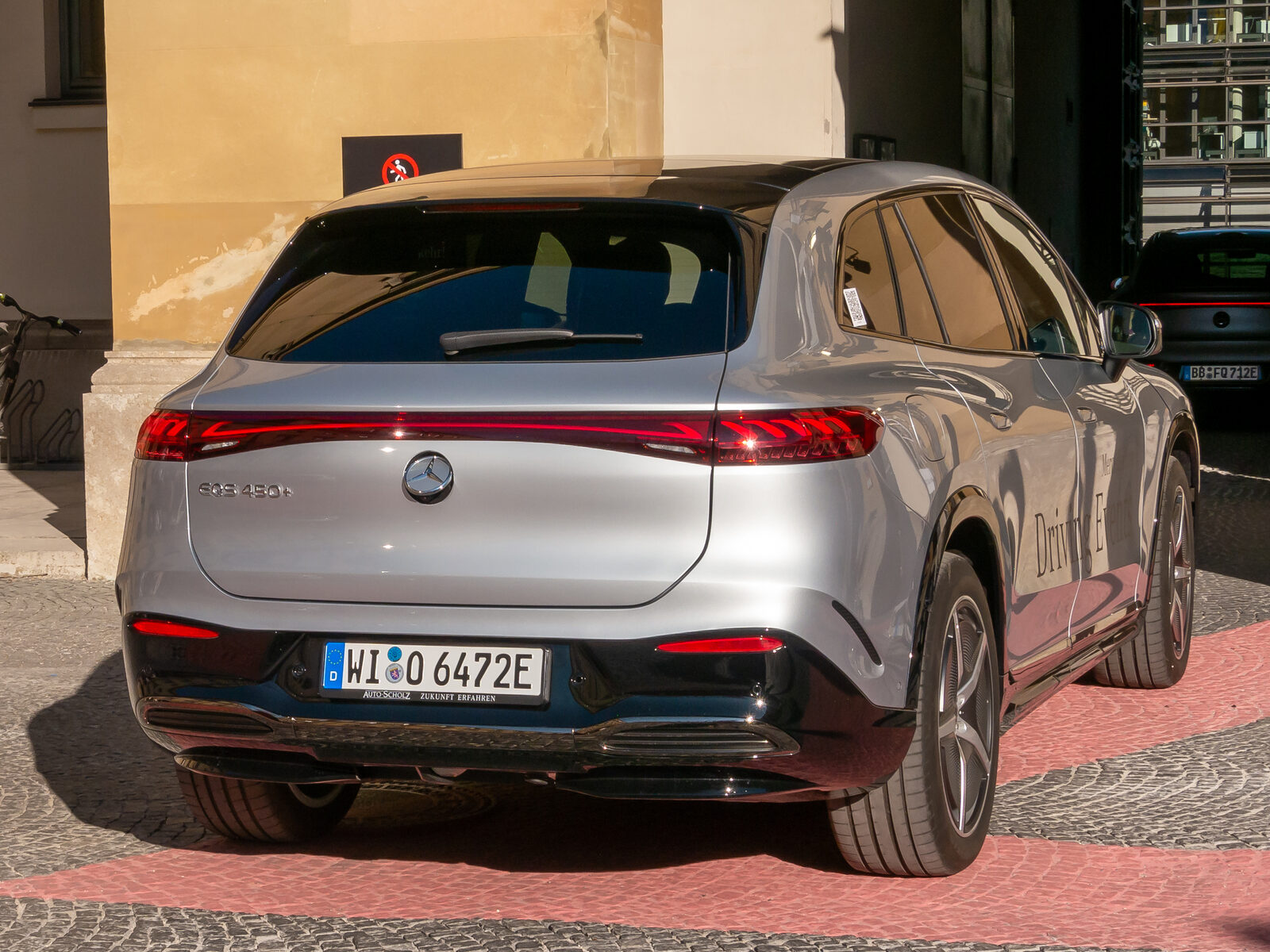
Level 2 reaches European roads through a different door. The Netherlands’ RDW spent about eighteen months testing Tesla FSD (Supervised), roughly 1.6 million kilometres on public roads plus track work, before granting it a provisional approval under Article 39 in April 2026. The driver stays legally responsible, a camera watches their attention, and the RDW is careful to note that the European software is a stricter build than the American one. What happened next is the revealing part. Lithuania recognised the Dutch approval in May, Estonia followed at the end of the month, and Belgium and Greece began fast-tracking the same move, all through the mutual-recognition mechanism that lets one member state accept another’s type approval. Small, agile states piggy-backed onto the Dutch homework and switched the system on within weeks, while Germany, France and Spain kept testing and deliberating. Other Level 2 systems came through other doors. Ford’s BlueCruise runs hands-off on approved motorway stretches in around sixteen European markets through ordinary type approval, and BMW’s hands-off Motorway Assistant, good to 130 km/h, was one of the first systems cleared under the new UN Regulation 171 for DCAS in late 2025. The exact paperwork varies. The point does not: the cars are already here, carrying real people, arriving one approval at a time, while the committee debates whether they should exist.
The robotaxi gap is where the picture turns embarrassing. Europe’s first commercial robotaxi service opened in April 2026 in Zagreb, run by China’s Pony.ai together with Uber and a local operator, with a safety attendant still in the seat across roughly 90 square kilometres of the city. The first ride-hailing robot on the European continent is Chinese software in Croatia, while Berlin, Paris and Amsterdam hold meetings. The one homegrown success, the French shuttle maker EasyMile, ran low-speed driverless pods in German and French towns and then pivoted toward airports and industrial sites, judging consumer autonomy not yet commercially viable for it. Europe’s autonomous-vehicle champion concluded the European market was not ready for its own product.
Now look outward. In China, Baidu’s Apollo Go delivered 3.2 million fully driverless rides in the first quarter of 2026 alone, peaking above 350,000 a week in March, across 27 cities, and has now driven more than 220 million kilometres with nobody at the wheel. In the United States, Waymo has driven more than 320 million kilometres (over 200 million miles) with nobody in the front seat, and carries hundreds of thousands of paid riders a week. In Europe’s largest economies, the number of commercial driverless rides on public roads is still essentially zero.
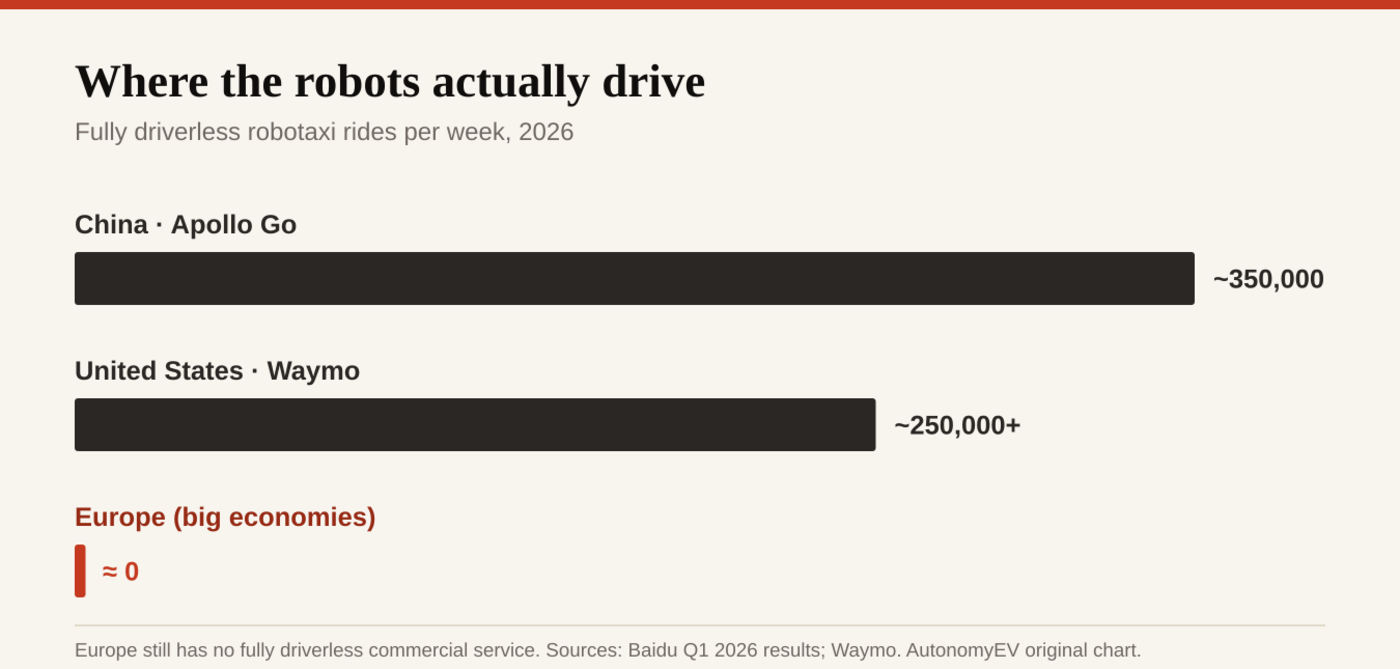
The difference is not engineering. The same companies would happily operate in Munich or Lyon. The difference is philosophy. The United States lets systems ship and polices them after the fact, through recalls and federal investigations, accepting that some of the learning will be public and painful. China subsidises and deploys at industrial scale and sorts out the rules around the running fleet. Europe requires approval before a wheel turns, and the approval queue is where ambition goes to wait.
Article 39 is the side door, and it is the only one open
It is worth understanding the mechanism, because the mechanism is the inertia.
Article 39 of Regulation (EU) 2018/858, the framework that governs vehicle type approval, is the exemption route for technology the existing rules never imagined. A manufacturer makes an equivalent-safety case to a national approval authority, the RDW in the Dutch example, and that authority can grant a provisional approval. That approval is valid in one member state only. Taking it Europe-wide requires a submission to the European Commission and then a favourable vote by a majority of member states in the responsible committee. The regulation itself can only be rewritten through the full co-decision process between the Parliament and the Council, which is a multi-year undertaking nobody in that room has started.
So the practical path for any genuinely new driving technology in Europe is: find one national regulator willing to do the work, get a provisional approval good in that country alone, and then wait for a committee of twenty-seven governments to agree to extend it. The EU-wide vote on FSD sits in exactly that committee, pencilled in for some point later in the year, with no guarantee. The technology arrives through a side door, into one country at a time, while the front door stays bolted.
Article 39 is, by some distance, the most efficient instrument in the building, and it is efficient precisely because it routes around the part of the system designed to say no first. That is a strange thing to be able to write about a safety regulator: the workaround is the part that works.
The incumbent Europe never tested
Here is the asymmetry at the centre of all of this. Europe demands that the machine prove it is safe before it is allowed to drive. The human driver it would replace was never asked to prove anything of the kind, and never will be.
Almost 20,000 people died on EU roads in 2024, 19,940 by the Commission’s count, a number that has barely improved in recent years. Worldwide the figure is about 1.19 million a year, and road crashes are the leading cause of death for people aged 5 to 29. The driver is the critical factor in the overwhelming majority of crashes: 94 percent in NHTSA’s US causation survey, the best-documented number available, with the honest caveat that “critical reason” means the last failure in the chain, not the assignment of blame.
And the driver is dangerous in two specific, measurable ways that a machine can be built to avoid entirely. In the United States, where the breakdown is clearest, speeding had a hand in 11,775 deaths in 2023 and distraction in at least 3,208 more, a figure NHTSA’s own modelling suggests is badly undercounted because distraction is hard to prove after a crash. A camera-monitored system that holds the posted limit and never once reaches for a phone removes both of those inputs by design. It is not that machines cannot err. They can pick a poor speed for conditions or misread a scene. It is that the specific, dominant human failure modes, going too fast and not looking, are exactly the ones automation is built to refuse.
We hand a licence to teenagers, to the chronically distracted, to the briefly furious and the quietly tired, and we ask them for none of the evidence we demand of the software meant to do better. The incumbent on Europe’s roads is the least scrutinised driver of all.
What “safer” should actually mean
The committee’s instinct is to count crashes. That is the wrong measure, and getting the measure wrong is part of how the caution becomes self-justifying.
What matters is harm, and harm scales with speed in a way that is not intuitive. A pedestrian struck at 37 km/h has roughly a one-in-ten chance of being killed. At 68 km/h it is closer to one in two. Kinetic energy rises with the square of speed, so a small difference in impact velocity is the difference between a hospital visit and a funeral. This means a system that drives a little more slowly and never gets distracted can be involved in more minor knocks and still put dramatically fewer people in the hospital. Frequency and harm are not the same axis, and the system that loses on the first can win decisively on the second.
The audited evidence already shows that exact shape. Across about 91 million driverless kilometres, the peer-reviewed analysis of Waymo’s record found that its crash reductions grew with severity: 79 percent fewer injury crashes, 81 percent fewer involving an airbag deployment, and 85 percent fewer serious-injury crashes, that last figure resting on few enough cases to carry a wide margin of error. An independent study using Swiss Re’s actuarial baseline found the same skew from the insurance side, 88 percent fewer property-damage claims and 92 percent fewer bodily-injury claims. The benefit concentrates exactly where it matters most, in the crashes that hurt people.
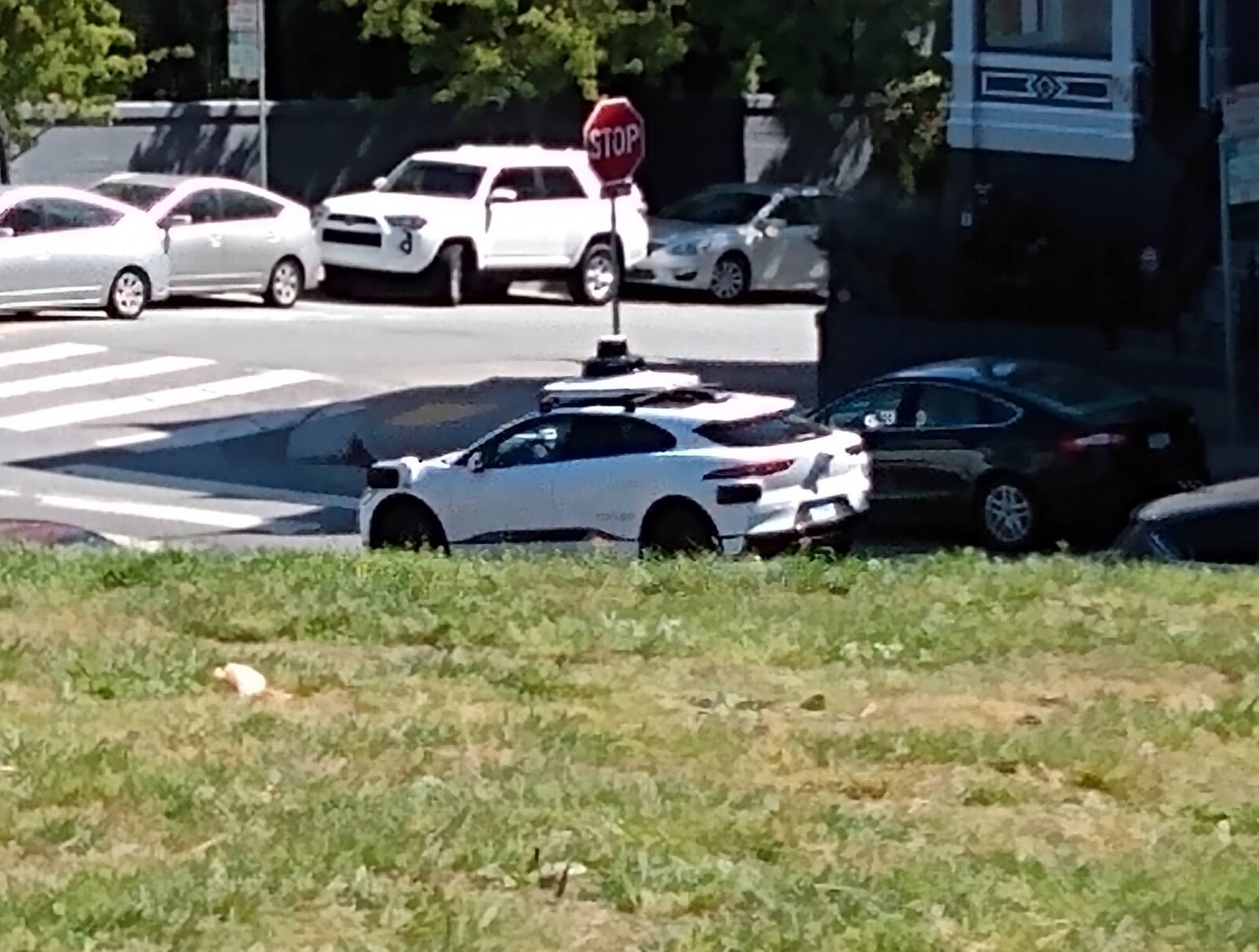
That is the kind of evidence Europe could be generating on its own roads right now: injury crashes per million kilometres, serious injuries, driver-monitor alerts, takeover rates, insurance claims, all measured against the human baseline on the same streets. It is a study the continent could run by approving deployment and counting outcomes. Instead it runs simulations and rejects them on the age of the participants.
FSD is still supervised, and that is the honest part
None of this is an argument for trusting a brochure, and the strongest version of the case has to concede what the skeptics get right.
Tesla’s FSD had real problems in its earlier forms, and the supervision requirement is the honest acknowledgement of them. On the crowd-sourced community tracker, the system needed a critical human takeover roughly every 295 kilometres on version 12 and every 795 or so on version 13. A system at that rate has no business driving unwatched, which is precisely why it is classified Level 2 Supervised, with a human legally responsible and a camera confirming they are paying attention. Version 14.3, released in April 2026, pushed that same crowd-sourced figure to somewhere between 2,300 and 2,700 kilometres between critical takeovers, a genuine jump across a single generation, though the data is self-selected by enthusiasts and read by critics as flat or worse.
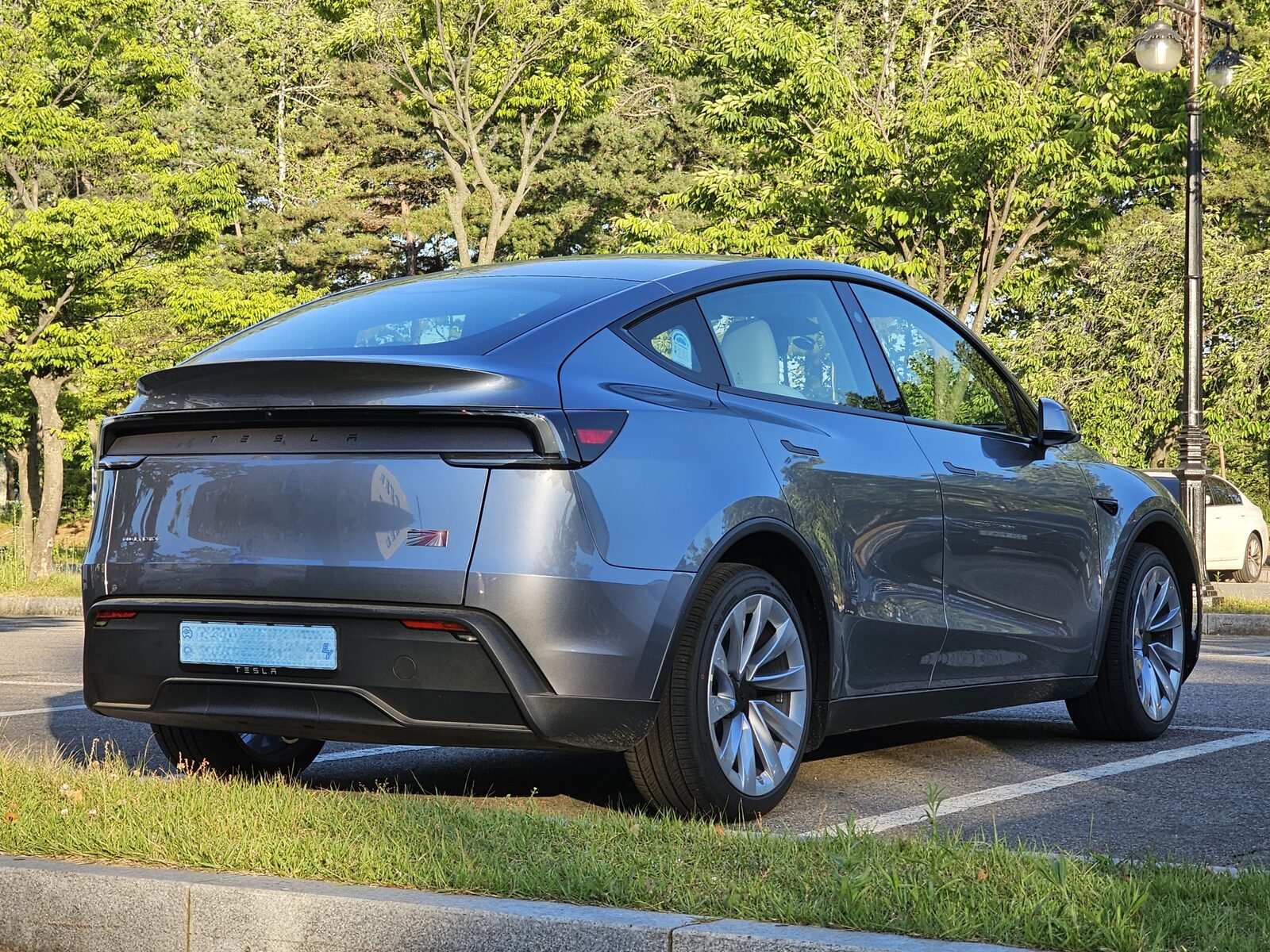
The caveats are real and should be stated plainly. A Reuters investigation in May 2026 found that Tesla’s own published safety comparison overstated its advantage by roughly threefold, by comparing its airbag-deployment crashes against a federal baseline that counts every towed-away crash. The system sits under an open US federal engineering analysis, the step immediately before a recall. None of that proves the technology is unsafe, and none of it makes the marketing a substitute for evidence.
The point is that the only way to resolve the argument is the one Europe keeps deferring. FSD is approved in the Netherlands now, supervised, with a regulator already entitled to watch it. Let it drive real European kilometres, publish the injury and takeover numbers against the human baseline on the same roads, and the question answers itself in a year. The supervised phase is not a problem to be debated indefinitely. It is the measurement period, and Europe is the one declining to start the clock.
The argument as it is actually happening
None of this is happening quietly. The European autonomy debate has moved onto X, where it is louder and more honest than anything in the committee minutes, and worth listening to from both sides.
The Tesla and AV community is in open celebration about the Dutch route. They track each new country in real time and call it a domino effect, because that is what it looks like, one national approval and then mutual recognition rippling outward through the smaller states. The story that spread fastest was that Lithuania’s approval was pushed through largely by a single determined owner who submitted the Dutch paperwork to his own government and pulled in the local press, with Tesla’s European arm reportedly caught off guard by its own rollout. Whether or not every detail holds, the fact that it is plausible tells you where the energy is, and it is not in Brussels.
The critique aimed at the regulators is blunt. “America and China build robots,” one widely shared post runs, “Europe builds committees.” Another, from someone who says they worked at Mercedes, lands harder: Europe’s first commercial robotaxi runs in Zagreb on a Chinese stack, and that is the same mistake the German car industry made fifteen years ago when it let battery-cell manufacturing go to Asia, now being repeated with self-driving. The sharpest version accuses regulators of protecting their own relevance rather than the public, because approving the technology quickly would mean admitting a company has already done the work. That is uncharitable, and it is not entirely wrong.
The safety side is not a strawman, and its most serious voice is the European Transport Safety Council. ETSC has warned publicly that the wave of national approvals is pushing Europe “towards a road safety cliff edge,” that an unelected committee meeting behind closed doors could authorise hands-off driving in European cities on the strength of one country’s approval while US federal investigations into the same system are still open, and that Europe has no equivalent of America’s crash investigators to scrutinise what follows. Its core objection is the Bainbridge point this piece opened with: the more capable the system looks, the worse its human supervisor becomes. The UK and Japan have made similar calls to slow the UNECE work and gather experience first.
Here is the thing worth noticing. The two camps agree on the premise. Supervised automation really does erode the supervisor, and a confident-looking Level 2 system really is a trap for human attention. Where they split is the remedy. One side says pause and deliberate until the risk is understood. The other says the risk is already understood, the human is demonstrably worse, and the way to manage the handover problem is to deploy under supervision and measure the outcomes rather than debate them for another few years. The first remedy carries a cost that never shows up in the minutes. The second carries a feedback loop. Europe has chosen the first, and it is the only party to this argument collecting no data at all.
Why the brain prefers the meeting
It is worth asking why institutions behave this way, because the answer is older than any committee.
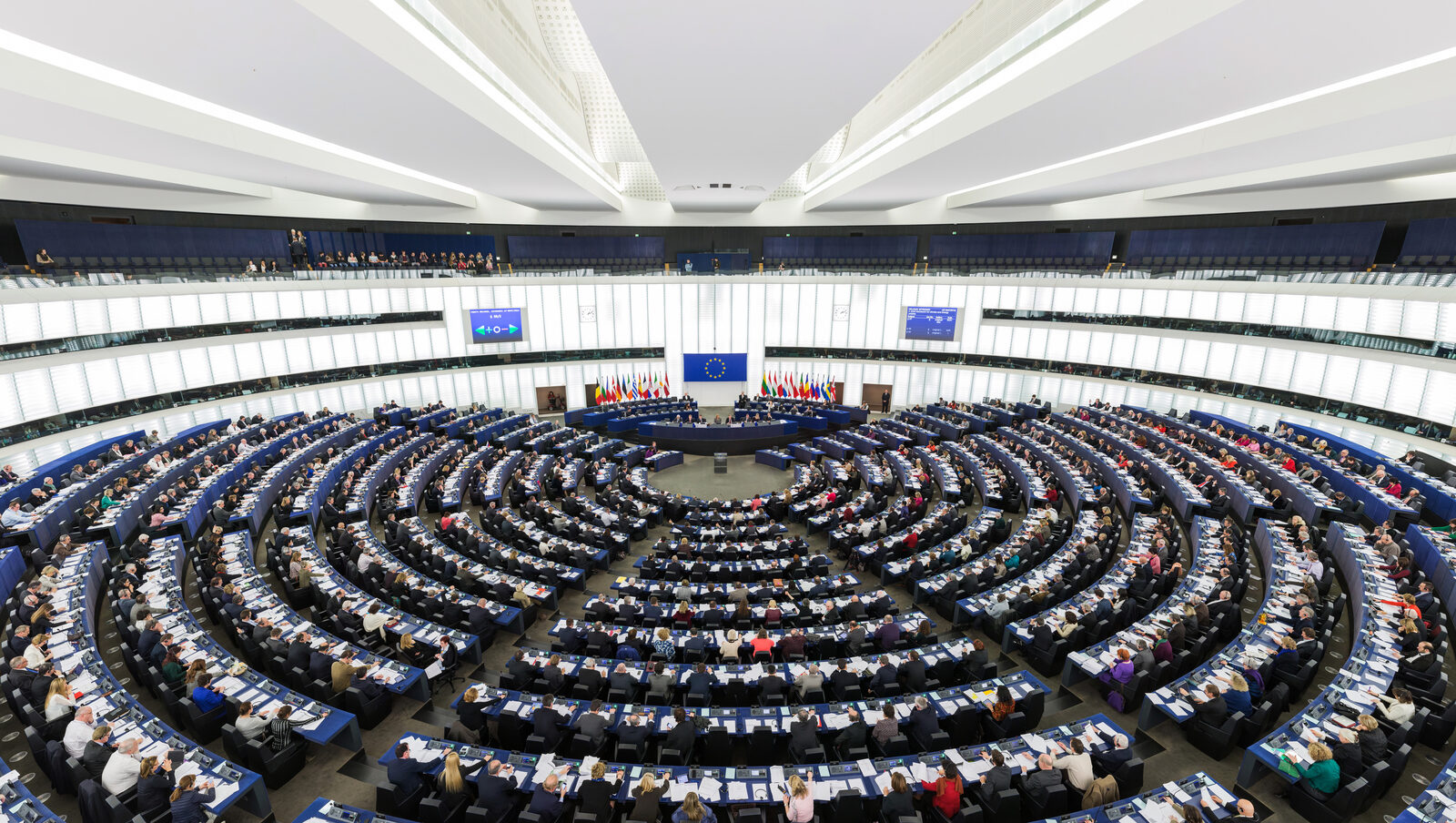
The human brain treats the unfamiliar as a threat before it treats it as anything else. Robert Sapolsky, the Stanford neurobiologist, has spent a career on the machinery. The amygdala, the brain’s alarm, fires at a novel or out-of-place stimulus in a fraction of a second, well before the prefrontal cortex, the slow and deliberate part, can weigh in on whether the thing is actually dangerous. His larger thesis, the one behind “Why Zebras Don’t Get Ulcers,” is that the stress response evolved for sharp physical emergencies, the lion on the savannah, and now fires the same way at the slow, abstract worries it was never built for. And under sustained stress the hormones that sharpen a fleeing animal dull the prefrontal cortex and hand the wheel to the amygdala and to old habit. Stressed and facing something new, the brain reaches for the most ancient option available: retreat to the familiar.
A regulator is a brain in a suit, running the same wiring.
Decision science has named the shapes this takes. Loss aversion, from Daniel Kahneman and Amos Tversky, finds that a loss hurts about twice as much as the equivalent gain feels good, so we overweight whatever could go wrong. Status quo bias, from William Samuelson and Richard Zeckhauser, is the pull to keep the default even when changing is the better bet. Omission bias, mapped by Jonathan Baron and Ilana Ritov, is the habit of judging harm we cause by acting far more harshly than the identical harm that happens because we did nothing. Put them together and you have the precautionary instinct in its purest form: make the new thing prove it is safe, and treat the familiar danger as the neutral baseline that needs no defence.
Now drop a real person into the institution. Approve a system that later kills someone, and the death has your name on it, a hearing, a headline, a line in your file. Delay, and the people who die in the ordinary traffic the system might have made safer die anyway, invisibly, belonging to no one. The incentives line up precisely with the biology. Action carries blame; inaction carries none. So the safe move, for the single brain and for the institution built out of many of them, is to wait, to ask for one more study, to book another meeting. The meeting is the amygdala’s choice.
The political philosopher Jason Brennan supplies the institutional half. In “Against Democracy” he argues that political decision-making is systematically incompetent because the incentives reward it: an official, like a voter, pays no personal price for getting a high-stakes call wrong, so the system rewards caution and consensus over being correct. His quarrel is with electorates rather than regulators, and the application here is mine. The mechanism still transfers. A body that faces no penalty for the deaths its delay permits, and a public reckoning if it approves something that later fails, is tuned to do nothing and call the result prudence.
None of this excuses the outcome. It diagnoses it, and the useful thing about a diagnosis is that you can correct for it, the way a navigator corrects for a known drift. You make the invisible cost visible. You count the people the status quo is killing while the committee deliberates, and you hold the old default to the same burden of proof as the new arrival. Europe does the reverse. It cross-examines the newcomer and waves the incumbent through.
The precaution is aimed at the wrong risk
Europe’s instinct is upside down. It treats the human as the safe baseline the machine must beat under laboratory conditions, and the machine as the danger that must prove itself before it is allowed to move. The figures point the other way. The human is the incumbent killing almost 20,000 Europeans a year, in the precise ways a machine can be designed not to. The honest way to learn whether the replacement is better is to let it drive and count the harm, which is what the US and China are doing while Europe defers.
That is not caution. It is the application of perfect scrutiny to the new thing and none at all to the old, with the difference paid in the meantime by the people the old thing keeps killing. This week the study went in the bin because its drivers were too young. The drivers and vulnerable road users actually dying on Europe’s roads were, as usual, nobody’s agenda item.
Sources
Regulation and approvals: UNECE UN Regulation 171 (DCAS); Regulation (EU) 2018/858; RDW on the provisional Tesla FSD type approval; ETSC, “Tesla approval pushes Europe towards a road safety cliff edge”; BMW DCAS / UN R171 approval.
The Level 3 retreat: Mercedes pauses Drive Pilot (electrive); BMW also abandons Level 3 (electrive).
Deployment and scale: Waymo safety impact data; Waymo + Swiss Re study; Baidu Q1 2026 results (Apollo Go); Pony.ai, Uber and Verne launch Europe’s first robotaxi in Zagreb; Reuters on Tesla’s safety statistics (via Electrek).
Road safety and human factors: WHO road traffic injuries; European Commission 2024 EU road deaths; NHTSA Critical Reasons for Crashes (DOT HS 812 115); NHTSA Speeding 2023; AAA Foundation, impact speed and pedestrian risk. Lisanne Bainbridge, “Ironies of Automation” (Automatica, 1983); Robert Sapolsky, “Why Zebras Don’t Get Ulcers”; Jason Brennan, “Against Democracy” (Princeton University Press, 2016).
Human-curated and examined by the human eye. Every figure here was checked against the primary sources listed above; the opinions are Yair Knijn’s own.


.jpg)


Comments
Closed.
Comments close 30 days after a piece runs. The thread on this one is locked.
Tips and corrections still welcome at tips@autonomy-ev.com.