













Geely's Xingyuan refresh pushes China's best-seller to 480 km
The Geome Xingyuan, already China's top-selling car, gains range to 480 km CLTC with only a small price bump as Geely tightens its grip on the sub-100,000 yuan EV segment.
Yair Knijn
Founder & editor-in-chief
- Geely
- China
- small EV
- BYD
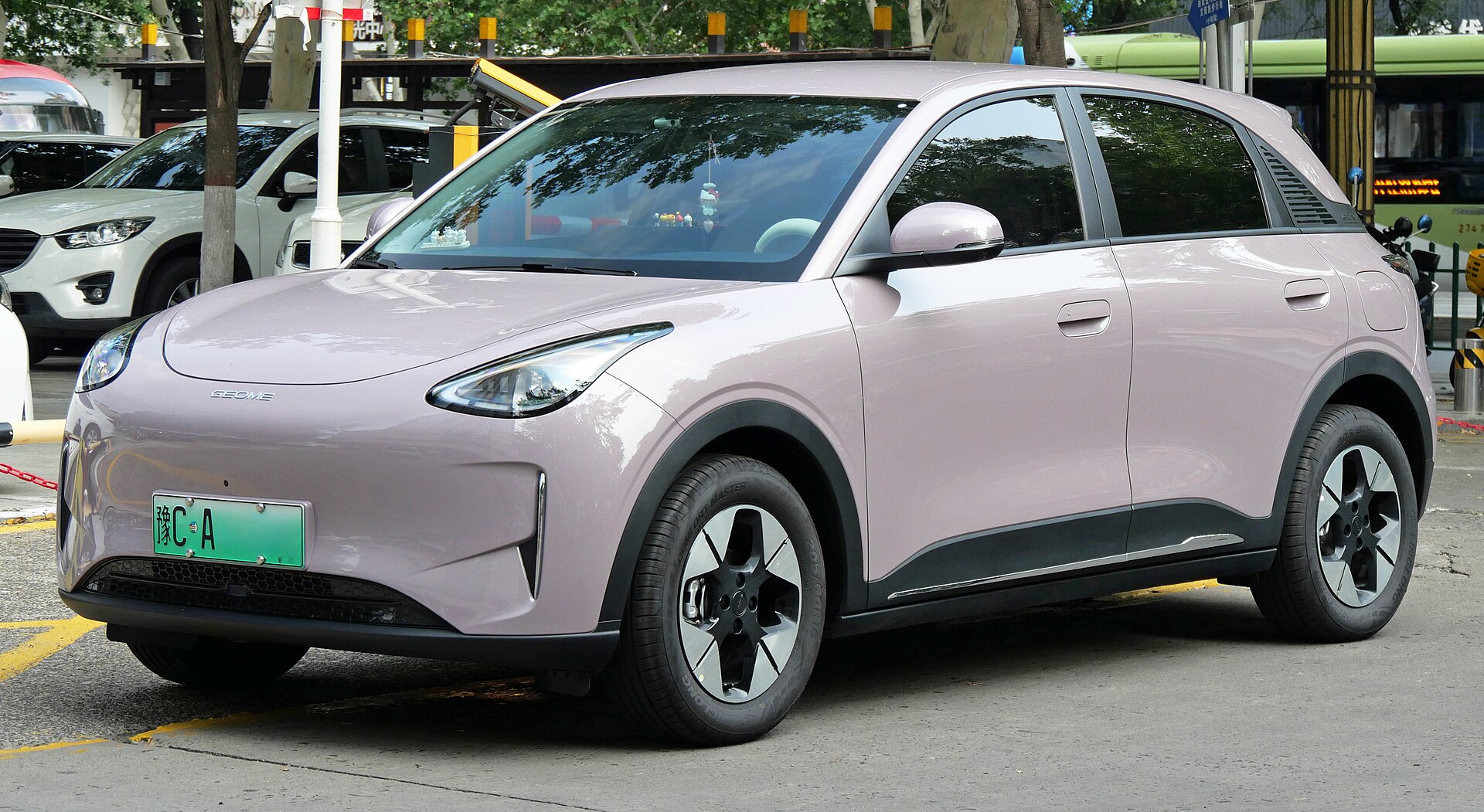
Geely just refreshed the car that has been quietly outselling rivals at the bottom of the Chinese market. The Geome Xingyuan, sold as the EX2 in some export markets, now offers up to 480 km of CLTC range in its top trim, up from 410 km on the outgoing version. Starting prices sit around 70,000 yuan, roughly 9,700 USD at current rates, though Geely is also running a 61,800 yuan promotional price on some trims. That is the headline. The more interesting part is what it says about where the volume in China actually lives.
A cheap car doing serious damage
The Xingyuan is no halo product. It is a 4.1 meter hatchback with LFP batteries and a rear-mounted electric motor in a RWD layout, with a cabin built to a price. It also happens to be China's best-selling passenger vehicle in the first half of 2025, with 204,940 units shipped ahead of the BYD Seagull at 174,912. Legacy gasoline sedans such as the Nissan Sylphy and Volkswagen Lavida still appear in the national top 20, but the Xingyuan has moved ahead of them on volume.
The refresh keeps the formula. Two battery options, 30 kWh and roughly 40 kWh according to published specifications, plus incremental work on aero and rolling resistance to reach the 480 km CLTC figure. DC fast charging remains modest, as expected in this class. Geely markets it plainly as a commuter car.
Why the segment matters
Western coverage tends to fixate on premium Chinese EVs, the Nio sedans and Xpeng coupes that show up at Munich. The actual battlefield is the 60,000 to 100,000 yuan bracket, where margins are thin and volume is enormous. BYD's Seagull, the Wuling Bingo, the Changan Lumin, and the Xingyuan are the cars moving the needle on Chinese fleet electrification. Geely's Geome sub-brand was organized to fight in this bracket.
The broader market context sits in CAAM monthly data reported through October 2025, which showed NEV penetration at 51.6 percent of new passenger sales. Small, affordable cars carry that figure. Anyone modeling Chinese EV exports, battery demand, or LFP supply needs to start from the Xingyuan, where the unit economics and pack volumes actually concentrate.
AutonomyEV's opinion
The Xingyuan refresh is a defensive move with offensive implications. Defensive, because BYD will refresh the Seagull and Geely cannot let a 70 km range gap open at this price point. Offensive, because Geely is clearly preparing this car for export under the EX2 name, and a 480 km CLTC figure translates to something usable, perhaps 360 km WLTP, in markets like Mexico, Southeast Asia, and eventually parts of Europe.
Whether the Xingyuan sells in China is settled. It does. The open question is whether European and US incumbents have anything credible to put against a 10,000 USD EV with 350 km of real range once tariffs and homologation are resolved. On current evidence, they do not, and the gap is widening with each refresh cycle like this one.

Comments
Closed.
Comments close 30 days after a piece runs. The thread on this one is locked.
Tips and corrections still welcome at tips@autonomy-ev.com.