













Lynk & Co 10 undercuts BYD on price, claims to beat it on charging
Geely's premium-leaning brand launches a sub-$25,000 sedan in China and says its peak charging rate tops BYD's Flash Charging, but the spec sheet matters more than the slogan.
Yair Knijn
Founder & editor-in-chief
- lynk-co
- byd
- fast-charging
- china-ev
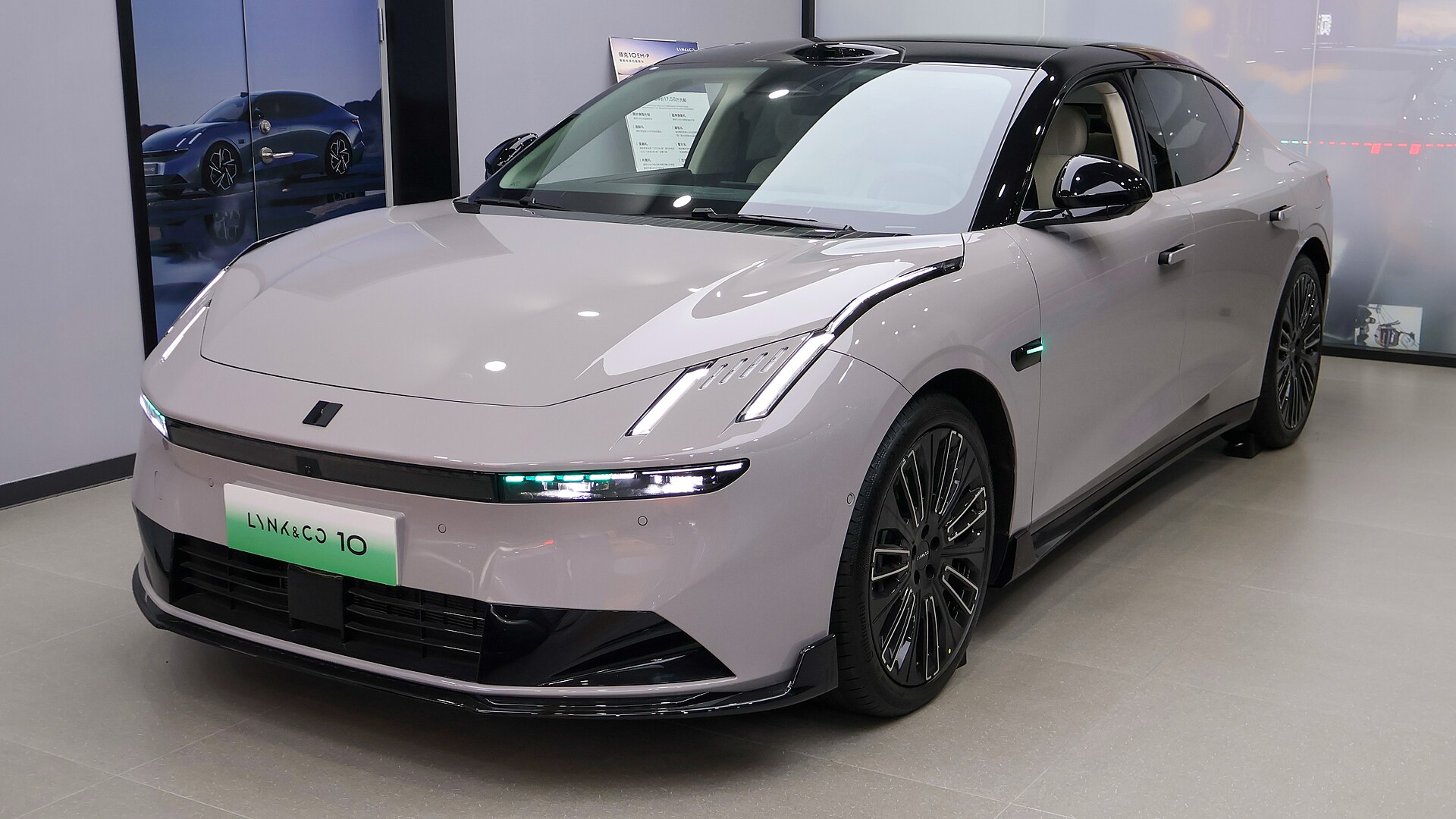
Geely's Lynk & Co brand has put its 10 series sedan on sale in China from about 25,000 USD, and the launch deck leans on one claim: peak DC charging that beats BYD's Flash Charging. That is a direct shot at the headline number from BYD's Super e-Platform, which the company introduced last year as the first mass-market megawatt charging stack.
What Lynk & Co is actually selling
The 10 is a midsize sedan sitting under the Zeekr ceiling and above the Geely Galaxy line. CarNewsChina lists the entry trim near 180,000 yuan and frames the pitch around a peak DC rate that, on paper, edges past BYD's 1,000 kW figure on a comparable 1,000 V architecture. The piece does not publish a sustained charging curve, a 10 to 80 percent time at a fixed ambient, or a battery supplier, which is where these claims usually settle into something measurable. Until Geely's filings or a third party logs a session on a public charger, the headline is a marketing number.
What is harder to argue with is the sticker. A 1,000 V capable sedan at 25,000 USD slots into the same price band as a mid-trim BYD Han or Seal, with a brand that still trades on a Volvo-adjacent image inside China. Geely does not need to win the charging spec war to make this car land. It needs the price to hold after the first quarter of incentives burns off.
How BYD's Flash Charging actually compares
BYD unveiled the Super e-Platform in March 2025, promising 1,000 kW peak rates, a 10C battery cell, and roughly 400 km of range added in five minutes on a compatible charger. Reuters reported that BYD planned to build out more than 4,000 of its own megawatt stalls to support the Han L and Tang L, the first two cars on the platform.
That installed base is the part competitors keep underselling. A higher peak number on a vehicle is only useful if there is a charger that can deliver it and a thermal envelope that holds the curve. BYD owns both ends of that chain. Lynk & Co will be plugging into a public CCS2 or GB/T network where 1,000 kW stalls are still rare outside BYD's own buildout and a handful of Huawei and Xpeng sites.
AutonomyEV's opinion
The interesting story here is not whose peak kW is bigger. It is that a Geely sub-brand can ship a 1,000 V sedan at 25,000 USD in 2026 and treat ultra-fast charging as a standard feature rather than a flagship trim. That ratchet is the one Western OEMs should be reading. Volkswagen, Stellantis, and Ford are still pricing 800 V architectures as a premium upcharge while Chinese brands are folding 1,000 V into the volume segment.
The charging claim itself will need a verified curve before it means anything. If Lynk & Co publishes a session log, or if a Chinese outlet runs the car on a BYD megawatt stall and a Geely one back to back, the comparison becomes real. Until then, treat the spec as a price-anchored marketing line and watch the order book.

Comments
Closed.
Comments close 30 days after a piece runs. The thread on this one is locked.
Tips and corrections still welcome at tips@autonomy-ev.com.