













Musk's 100 GW Solar Plan Runs Into Manufacturing Math
Elon Musk wants SpaceX and Tesla to stand up 100 GW of US solar cell and module capacity in three years. The supply chain says otherwise.
Yair Knijn
Founder & editor-in-chief
- Tesla
- solar
- manufacturing
- Musk
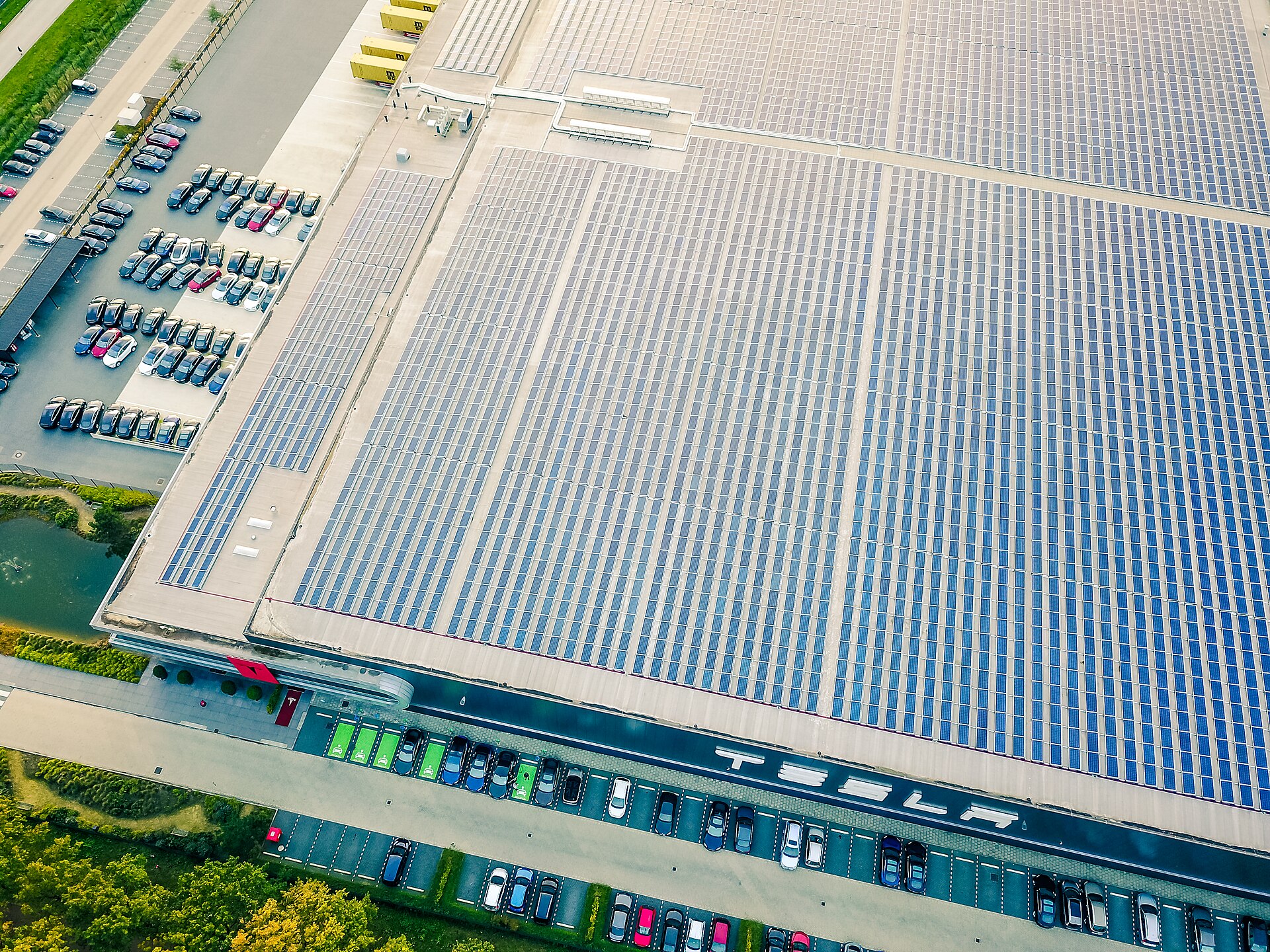
Elon Musk says he wants SpaceX and Tesla engineers to jointly build out 100 gigawatts per year of US solar cell and module capacity, and he wants it done in three years. CleanTechnica's read walks through the announcement and the obvious problem: the number is bigger than the entire installed US solar manufacturing base, by a wide margin.
For context, SEIA and Wood Mackenzie's US Solar Market Insight tracking shows domestic module assembly has scaled past 50 GW of nameplate capacity, but US cell capacity is still a small fraction of that, with most cells imported from Southeast Asia. Wafer and polysilicon steps barely exist on US soil. 100 GW of vertically integrated cell-and-module output in 36 months would mean building, in parallel, more capacity than the entire current US industry, plus the upstream that industry leans on overseas.
The Tesla solar track record
Tesla Energy is not a fresh entrant. The Buffalo plant, originally pitched as Gigafactory 2 for Silevo's high-efficiency cells, never reached the gigawatt-scale solar output Musk projected at acquisition. Solar Roof installations have remained niche. Tesla's residential solar deployments have shrunk year over year in recent reporting periods. None of that disqualifies a new push, but it sets the prior. A team that has not delivered a multi-gigawatt cell line before is now being asked to deliver one hundred of them.
SpaceX brings serious manufacturing discipline. Starlink antennas ship in the millions, and Raptor production has scaled hard. But solar cells are a different process stack: wet chemistry, high-temperature diffusion, PECVD, screen printing, and increasingly TOPCon or heterojunction process control. The closest analog on the SpaceX side is the Starlink production line, not rocket engines.
Where the policy math helps, and where it doesn't
The Section 45X Advanced Manufacturing Production Credit does pay real money per watt for US-made solar cells, wafers, and modules. At full stack production, 45X can reach roughly $0.11 per watt for cells plus modules, which is enough to make domestic lines viable against imports if you can hit yield. That is the part of the plan that pencils out.
What does not pencil out on a three-year clock is equipment lead times, permitting, hiring, and qualifying upstream wafer supply. Tool vendors for cell lines are concentrated and backlogged. A single 5 GW cell fab is a multi-year build under good conditions. Stacking 20 of them in 36 months, with US labor and US permitting, is not a schedule problem you solve with software.
AutonomyEV's opinion
Treat the 100 GW number as a recruiting and political signal, not a forecast. Musk has used round, large numbers before to pull engineers and policy attention toward a problem, and on cars and rockets some of those numbers eventually showed up, late. On solar, the realistic ceiling for a serious three-year SpaceX-Tesla push is probably 10 to 20 GW of incremental US cell and module capacity, contingent on 45X surviving in current form. That would still be the largest single solar manufacturing buildout in US history. It just would not be 100.


Comments
Closed.
Comments close 30 days after a piece runs. The thread on this one is locked.
Tips and corrections still welcome at tips@autonomy-ev.com.