













Tesla's FSD v14.3.3 Adds a Live Streak Counter. That's a Problem.
A live intervention-free counter on the driving display turns supervised FSD into a scoreboard, which is exactly the wrong incentive for a Level 2 system.
Yair Knijn
Founder & editor-in-chief
- tesla
- fsd
- driver-monitoring
- nhtsa
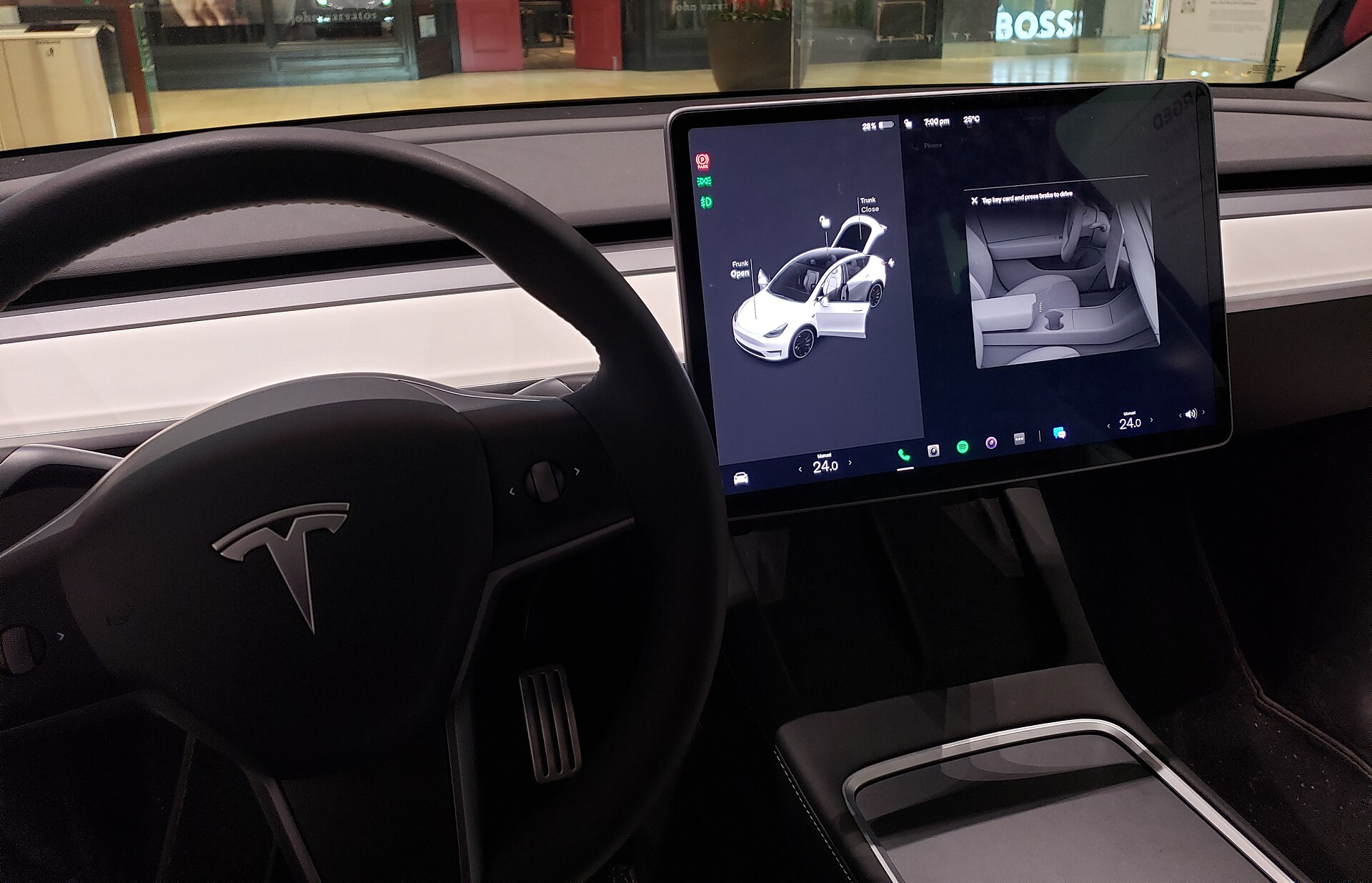
Tesla pushed FSD v14.3.3 this week with two changes worth talking about. One is a useful tweak to Actually Smart Summon. The other is a live, on-screen counter that tracks how long you have driven without taking over. Teslaoracle's writeup of the release notes describes the counter as a live streak meter displayed during supervised driving.
The Summon update is fine. The streak counter is the story.
What the counter actually does
The counter increments in real time while FSD is engaged and the driver does not intervene. Touch the wheel to nudge a lane choice, tap the brake at a sketchy merge, or take over for a construction zone, and the streak resets. The number sits on the driving display where the driver is supposed to be watching the road.
Tesla's own owner's manual for FSD (Supervised) is unambiguous: the driver must keep hands on the wheel and eyes on the road, and is responsible for the vehicle at all times. Under SAE J3016, that puts FSD at Level 2, where continuous human supervision is the entire safety case.
A visible streak counter rewards the opposite behavior. It rewards not intervening. The longer you wait to take over, the higher your number. The number resets when you do the thing the system explicitly requires you to do.
Why this matters to regulators
NHTSA already has an open file on Tesla's driver-attention design. In April 2024 the agency's Office of Defects Investigation opened recall query RQ24-009 to examine whether the December 2023 over-the-air remedy for Autopilot, which added more driver monitoring prompts, was actually sufficient to address foreseeable misuse. That query is still live.
NHTSA also collects crash data on Level 2 systems under its Standing General Order, so any uptick in FSD-engaged crashes after this UI change will show up in the agency's monthly reports. A counter that gamifies non-intervention is the kind of human-factors design choice ODI investigators tend to ask about in writing.
The broader research is not on Tesla's side here. The IIHS has reported that partial automation has not produced measurable crash reductions, and that drivers tend to disengage from the task when the system feels competent. A live score for staying disengaged makes that worse, not better.
AutonomyEV's opinion
Tesla can ship whatever UI it wants on a Level 2 system, and the Summon improvements in v14.3.3 are the kind of incremental work that makes the product more usable. The streak counter is a different category. It is a leaderboard metric placed inside a system whose legal and engineering premise is that the human will intervene when needed.
There are two clean fixes. Move the counter off the driving display and into the trip summary screen, where it informs without nudging. Or, better, redefine the metric so interventions do not reset it, since a well-timed takeover is the correct behavior, not a failure. Until one of those happens, expect this UI to come up the next time NHTSA writes Tesla a letter.
Source notes
- Tesla FSD v14.3.3 adds live intervention-free streak counter, supports: FSD v14.3.3 release notes describe a live intervention-free streak counter and Actually Smart Summon improvements.
- Tesla Owner's Manual: Full Self-Driving (Supervised), supports: Tesla classifies FSD as a hands-on, eyes-on supervised driver assistance feature.
- NHTSA Standing General Order on Crash Reporting for ADAS and ADS, supports: NHTSA requires manufacturers to report crashes involving SAE Level 2 ADAS within set windows.
- ODI Recall Query RQ24-009 on Tesla Autopilot post-recall remedy, supports: NHTSA opened a recall query in April 2024 examining whether Tesla's December 2023 driver-attention remedy was sufficient.
- SAE J3016 Levels of Driving Automation, supports: SAE J3016 defines Level 2 as systems where the human driver must continuously supervise the driving task.
- IIHS study: partial automation does not make driving safer, supports: IIHS research finds partial automation systems do not reduce crash rates and can encourage disengagement.


Comments
Closed.
Comments close 30 days after a piece runs. The thread on this one is locked.
Tips and corrections still welcome at tips@autonomy-ev.com.