













Tesla vs BYD Is Not One Scorecard. Here Is What To Watch.
Five decision signals matter more than the headline volume race: BEV-only mix, margins, Europe routing, autonomy revenue, and ownership experience.
Yair Knijn
Founder & editor-in-chief
- tesla
- byd
- industrial-policy
- strategy
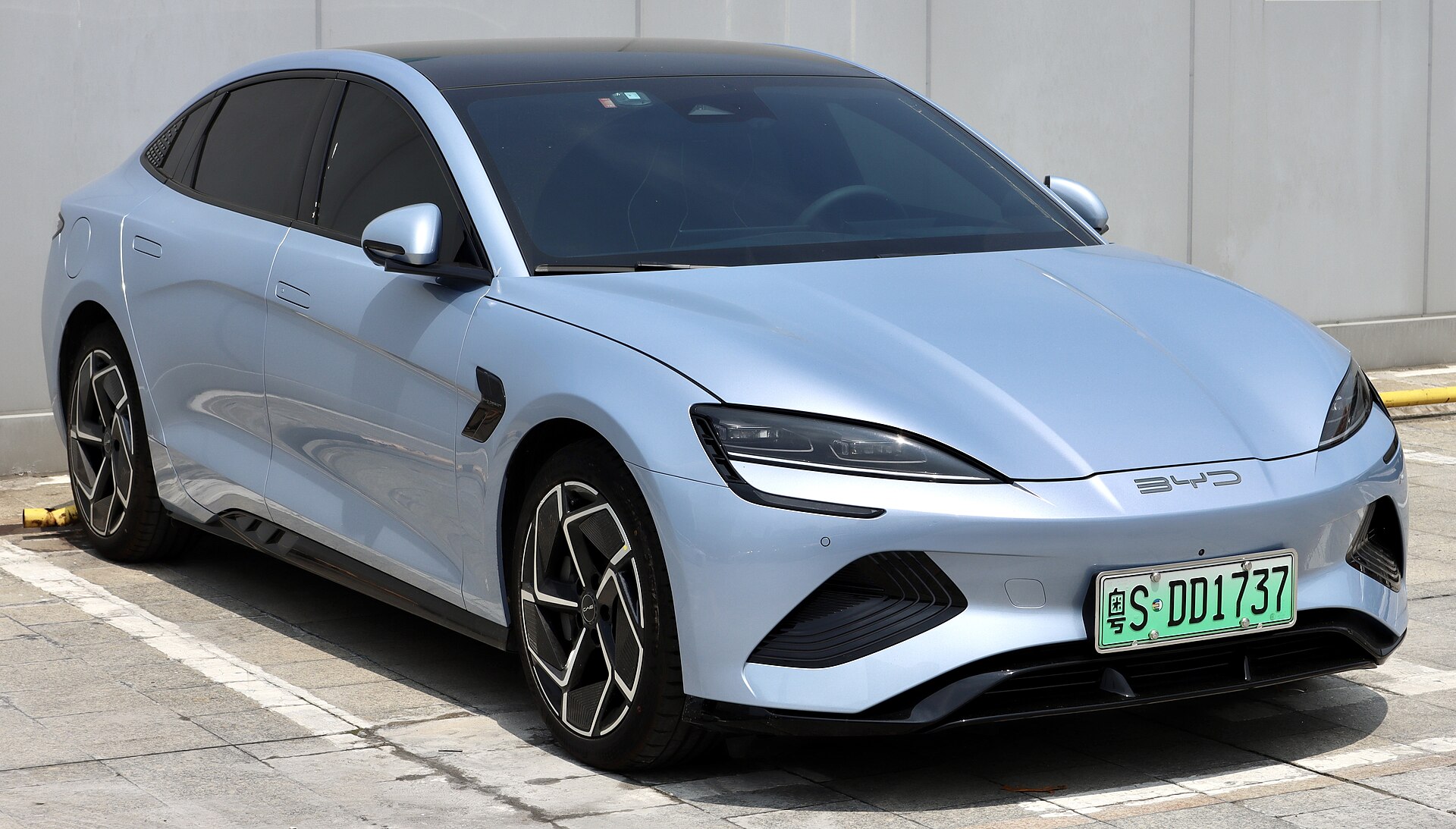
The May 2026 deepresearch.ninja showdown report frames the rivalry in headline volume terms: BYD leads on total new energy vehicle sales, Tesla leads on pure battery electric vehicles in Q1 2026, and legacy automakers are losing share on both scoreboards. That comparison is a useful starting point, yet it points toward a single winner where the market is actually sorting into parallel industrial policy zones, each rewarding a different technology and supply chain stack.
The volume chart hides three different businesses
Per the IEA Global EV Outlook 2025, electrified vehicles are on track for roughly one in four new cars sold globally, with China still pulling the average upward. That figure drives every board deck this year, and it also explains why the horse race misleads. BYD's 2025 total, disclosed in its monthly HKEX production and sales filings, combines battery electric vehicles and plug-in hybrids in roughly even share. Tesla's Q4 2025 update on its IR site reports pure BEV deliveries only. Comparing headline figures such as 4.6 million against 1.64 million is therefore a matchup between two product portfolios built for two regulatory regimes.
BYD operates as a vertically integrated manufacturer with in-house cells, power electronics, and a plug-in hybrid option for markets where charging remains thin. Tesla runs as a software and energy business with Supercharger access, full self-driving revenue, and a concentrated BEV product line. Legacy OEMs sit outside both models, which is why margin pressure tends to surface in their results first.
Why legacy automakers are hedging their bets
Toyota's decision to expand hybrid output through 2025 reads as a margin play: hybrids generate cash while the BEV cost curve continues to move. VW, Stellantis, and Hyundai are running variations of the same strategy with different hybrid-to-BEV ratios. Capital allocation filings tell you more about their real direction than launch-event messaging.
Geography is the second hedge. The European Commission's final countervailing duties on Chinese BEVs, in force since October 2024, did not halt BYD's European push. It redirected it. BYD's Szeged plant in Hungary is the tariff response, and as output ramps, the duty increasingly functions as a tax on competitors that failed to localize quickly. Watch which legacy OEMs co-locate suppliers near that footprint.
AutonomyEV's opinion
Quarterly volume rankings make for easy headlines. Five signals carry more weight for anyone tracking where autonomy-ready electrification is actually heading.
BEV-only mix. BYD's plug-in hybrid share is a tell. If pure BEV share inside BYD's own book keeps rising quarter over quarter in its monthly disclosures, the transition story holds. If plug-in hybrids grow faster, the global BEV curve is softer than the IEA headline suggests.
Automotive gross margin, ex-credits. Tesla's pricing power and BYD's cost floor meet here. Sustained automotive gross margins below 15% for either company would reshape competitive math for everyone downstream.
Europe tariff workarounds. Szeged ramp rate, second-site announcements, and which Tier 1 suppliers follow. The duty sets a deadline; localization speed determines who pays it.
Autonomy and software revenue as a line item. Tesla is the only major player currently arguing this case in public disclosures. If full self-driving attach rates and robotaxi unit economics fail to appear as discrete revenue within two more quarters, the software premium remains narrative rather than reported business.
Ownership experience over spec sheets. Charging reliability, service turnaround, over-the-air update cadence, and resale value. Consumer trust is shifting from range numbers toward daily hassle, and that is where brand equity compounds. Most legacy entrants remain weakest on that score.


Comments
Closed.
Comments close 30 days after a piece runs. The thread on this one is locked.
Tips and corrections still welcome at tips@autonomy-ev.com.