













BYD's Blade 2.0 Survives an 8-Hour Livestream Beating. So What?
A grinder, a saw, and a hammer on a livestream is good marketing. The real test is whether Blade 2.0 clears China's new no-fire-no-explosion rule.
Yair Knijn
Founder & editor-in-chief
- BYD
- Blade Battery
- LFP
- battery safety
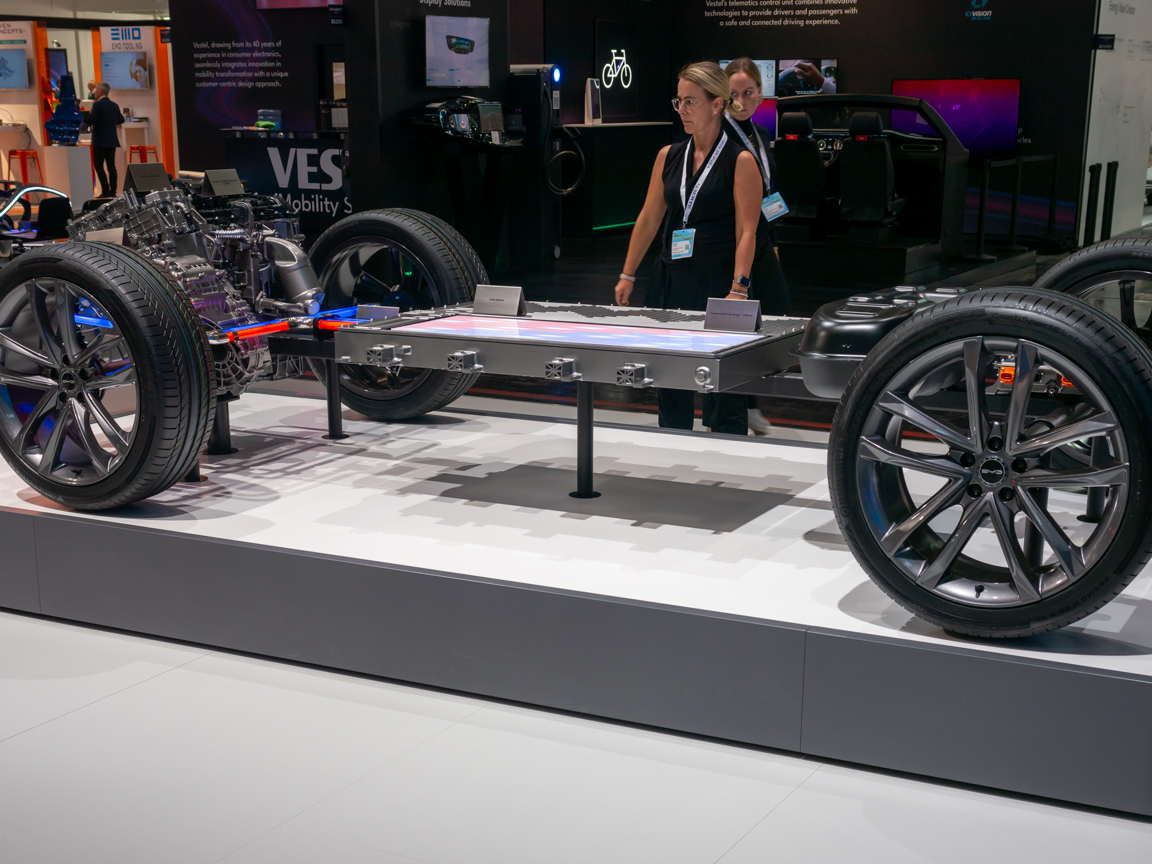
A group of Chinese bloggers spent the better part of a workday attacking a second-generation BYD Blade pack with an angle grinder, a circular saw, and a hammer, on camera, and the pack refused to burn. The play-by-play, captured by CarNewsChina, describes roughly eight hours of physical abuse with no fire and no runaway event. It is good content. It is also worth asking what it actually proves.
What the video shows, and what it doesn't
A livestream teardown is not a controlled abuse test. There is no instrumented thermocouple grid published with the footage, no state-of-charge disclosure for the cells being cut, and no third party verifying that the pack pulled apart on camera is the same SKU shipping in production cars. BYD's first-generation Blade earned its reputation in 2020 partly because the company published a nail penetration test against ternary cells and let outlets replicate the setup. The 2026 video, as described by CarNewsChina, is closer to a stunt than a test report.
That said, the stunt is consistent with what LFP chemistry is supposed to do. Lithium iron phosphate cells have a higher thermal runaway onset temperature than NMC cells and release less energy when they do go. A blade-format cell with a long, thin geometry sheds heat more easily than a chunky prismatic NMC cell. Cutting one with a saw at low state of charge and getting smoke instead of flame is not surprising. It is the expected outcome.
The regulation that actually matters
The context the video skips over is the rulebook. China's updated battery safety standard, GB 38031-2025, reported by Reuters, requires that an EV pack neither catch fire nor explode after a triggered thermal runaway event, and it removes the previous five-minute warning window that let automakers ship packs which would eventually burn. The standard kicks in during 2026, which is exactly the window in which Blade 2.0 needs to be type-approved.
A pack that survives a saw on a livestream is marketing. A pack that survives the GB 38031-2025 internal-trigger thermal runaway test, with regulators watching, is a product. Those are not the same document.
AutonomyEV's opinion
Blade 2.0 almost certainly meets the new Chinese standard. BYD would not have staged this kind of public event if it expected an internal-trigger test to embarrass it later. The interesting question for buyers outside China is whether European and US regulators move toward the same no-fire-no-explosion bar, or stay with the looser thermal-propagation timing rules currently in UN GTR 20 and FMVSS 305a. If they do not, Chinese-market packs will quietly become the safest in the world, and Western OEMs will keep shipping designs that meet a weaker spec while marketing them as equivalent. That is the gap to watch, not the saw.
Source notes
- BYD Blade 2.0 survives 8-hour violent teardown: bloggers grind, saw, hammer with no fire, supports: Bloggers spent roughly eight hours grinding, sawing, and hammering a second-generation BYD Blade pack on a livestream without triggering a fire.
- China issues new EV battery safety rule banning fires and explosions, supports: China's updated GB 38031-2025 standard requires EV battery packs to neither catch fire nor explode after thermal runaway, taking effect in 2026.

Comments
Closed.
Comments close 30 days after a piece runs. The thread on this one is locked.
Tips and corrections still welcome at tips@autonomy-ev.com.