













China's robotaxis are the AI agent test case nobody wants to fail
Experts call agentic AI too risky for healthcare and aerospace. China's robotaxi operators are running that experiment on public roads, at scale, today.
Yair Knijn
Founder & editor-in-chief
- robotaxi
- china
- ai-safety
- regulation
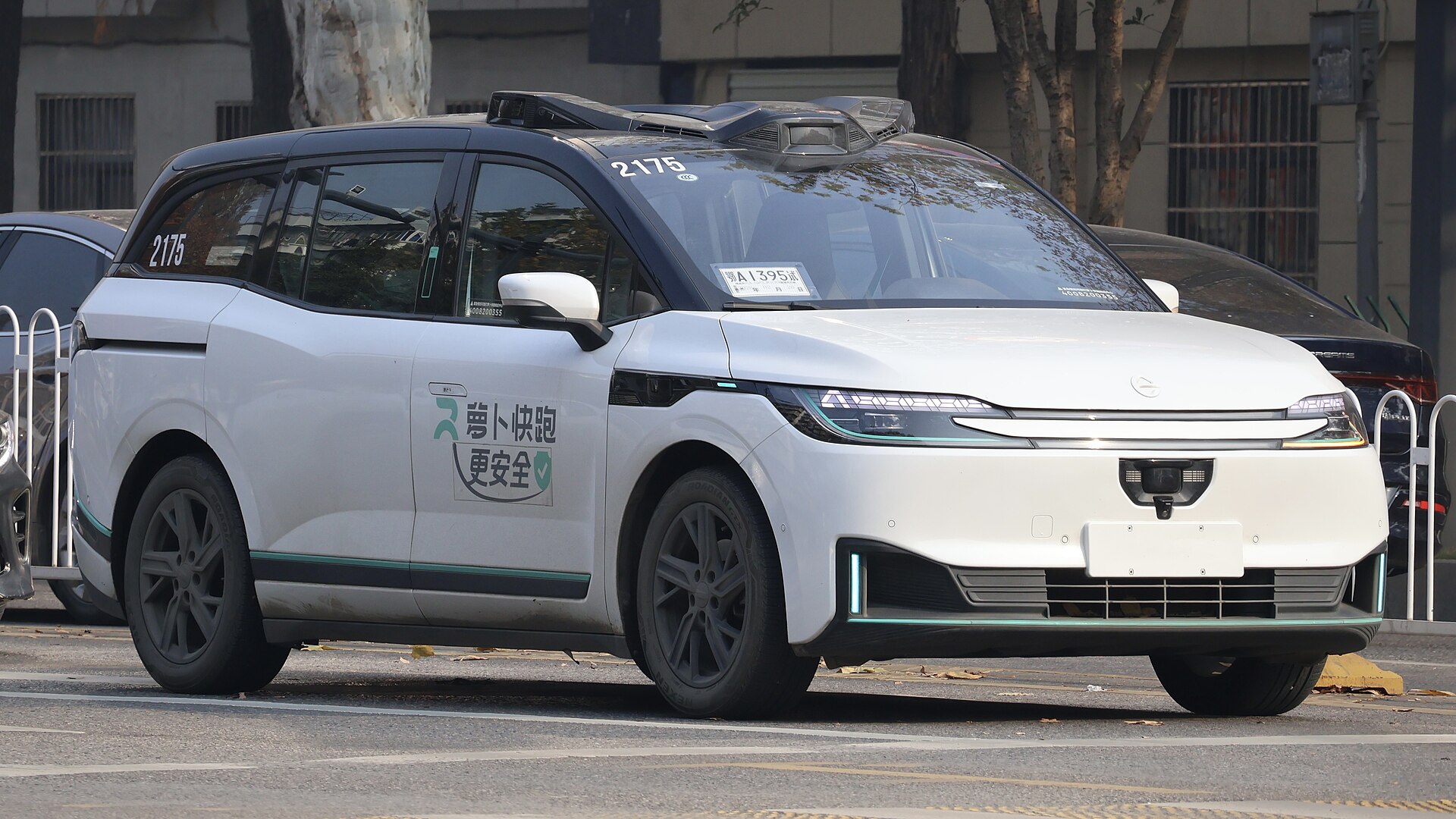
An IDC panel covered by SCMP drew a clean line under what China's AI vendors have been dancing around: agentic systems that act on their own inside a workflow are a hard sell in verticals where mistakes kill people. The panelists named healthcare and aerospace. They did not name autonomous driving. That omission is doing a lot of work, because the most aggressive deployment of agentic AI on Chinese soil today sits in a robotaxi, not a hospital or a cockpit.
The trust gap is already operational
A robotaxi is an AI agent with a steering column. It perceives, plans, and executes inside a defined workflow, which fits the definition the SCMP write-up uses to separate agentic AI from chatbots. Baidu's Apollo Go, Pony.ai, and WeRide all run permitted commercial robotaxi operations in Chinese cities, with Apollo Go, Pony.ai, and WeRide each holding permits for fully driverless service in at least some of those markets. Pony.ai and WeRide trade on Nasdaq as PONY and WRD respectively, and both now file public investor disclosures as US-listed companies, as Baidu does for Apollo Go. WeRide's investor site sits at ir.weride.ai.
We are not claiming the three operators run identical fully driverless service. Permits differ by city, by vehicle, and by time of day, and several deployments still rely on an in-cabin or remote safety monitor that operators do not always foreground in their marketing. What is shared across the three is the direction of travel: each is pushing toward less human oversight, faster, than the IDC panelists would tolerate in aerospace or healthcare.
Beijing's posture is less binary than the slogans
Chinese authorities authorize commercial robotaxi pilots city by city and retain the power to pause them. In April 2026, regulators suspended new robotaxi permits after a Baidu Apollo Go incident in Wuhan, a move that affected Baidu, Pony.ai, and WeRide. Pilots expand municipality by municipality, and operators publish what they choose to publish, on their own schedule.
That asymmetry is the actual problem. The safety case for any of these services is built almost entirely from data the operator itself controls and chooses to release through investor channels. None of these are independent audits, and none of them substitute for one.
AutonomyEV's opinion
The IDC framing is useful, and it cuts the other way from how it was delivered. If agentic AI is too risky for aerospace, where every system is certified and every operator is trained, the bar for a robotaxi carrying a stranger through a Chinese intersection should be higher than it is for a chatbot. Today the public-facing evidence base sits closer to the chatbot end of the spectrum: operator-controlled metrics paired with selective disclosures, plus city-level permits that lack a unified national safety standard outsiders can audit.
What would move the trust needle is boring and specific. Third-party access to disengagement and incident data matters. So does a standardized definition of a safety-relevant event. A regulator willing to pause a pilot without waiting for a fatality would help too, and April's permit suspension suggests Beijing already has that lever. Until independent verification catches up, the right way to read every Chinese robotaxi ride-count announcement is as a marketing artifact rather than a safety result. The export version of these systems is heading to Europe and the Gulf. The trust questions should travel with them.

Comments
Closed.
Comments close 30 days after a piece runs. The thread on this one is locked.
Tips and corrections still welcome at tips@autonomy-ev.com.