







Tesla LFP Model 3 Shows Split Battery Degradation Readings
A 2026 Standard Range owner logged 6.3 percent loss on S3XY Dash against 0.9 percent on Teslamate after three months and questions which figure reflects reality.
Yair Knijn
Founder & editor-in-chief
- tesla
- model3
- battery
- lfp
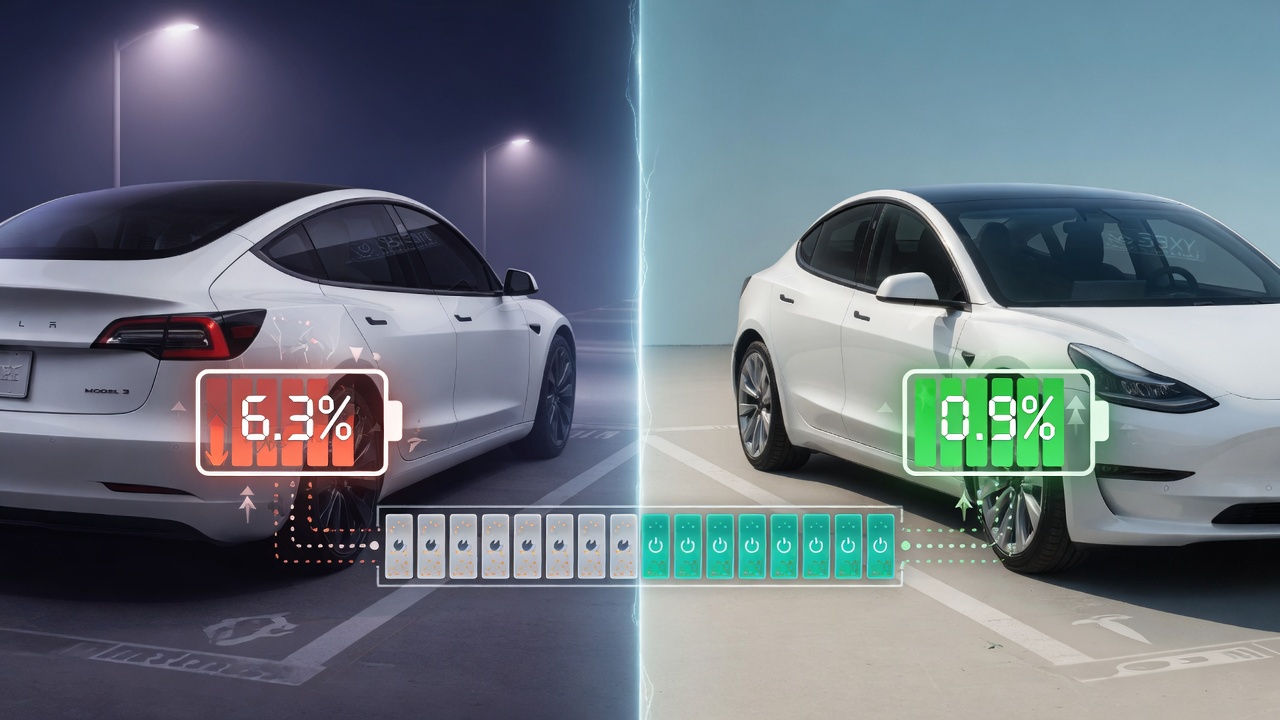
A new Tesla Model 3 owner posted details from two separate tracking tools that produced sharply different battery health numbers. The post on r/TeslaModel3 titled Battery degradation after 3 months, 2026 LFP SR shows S3XY Dash reporting 6.3 percent loss while Teslamate shows 0.9 percent.
Tool Calibration Gaps
S3XY Dash pulls data directly from the vehicle but appears to rely on an initial reference point set at delivery. Teslamate logs raw BMS values over time and applies its own filtering. For a vehicle delivered only three months ago the lower number aligns better with expected behavior on a fresh LFP pack.
LFP Estimation Limits
LFP cells maintain a flat voltage curve across most of their state of charge range. This makes capacity calculations sensitive to the last full charge cycle and temperature history. Tesla Model 3 Owner's Manual notes that owners should charge to 100 percent at least once per week to keep the BMS calibrated.
AutonomyEV's opinion
The 6.3 percent figure likely stems from an early reference snapshot that has not yet been updated by a proper full charge cycle. Track the same vehicle with one consistent tool for another six months and ignore single-app snapshots on any new LFP pack. Real degradation will appear gradually and will stay well below warranty thresholds if the car follows normal use patterns.






Comments
Talk back.
Disagreement is welcome. Personal attacks, slurs, and recycled press releases are not.
House rules: be useful, be brief, link your sources.