













What a Digital Twin of an EV Drivetrain Is Actually Worth
A mechatronics student asked Reddit whether a system-level digital twin of an e-drive is industry-relevant. The honest answer is yes, with caveats.
Yair Knijn
Founder & editor-in-chief
- digital-twin
- e-drive
- simulation
- powertrain
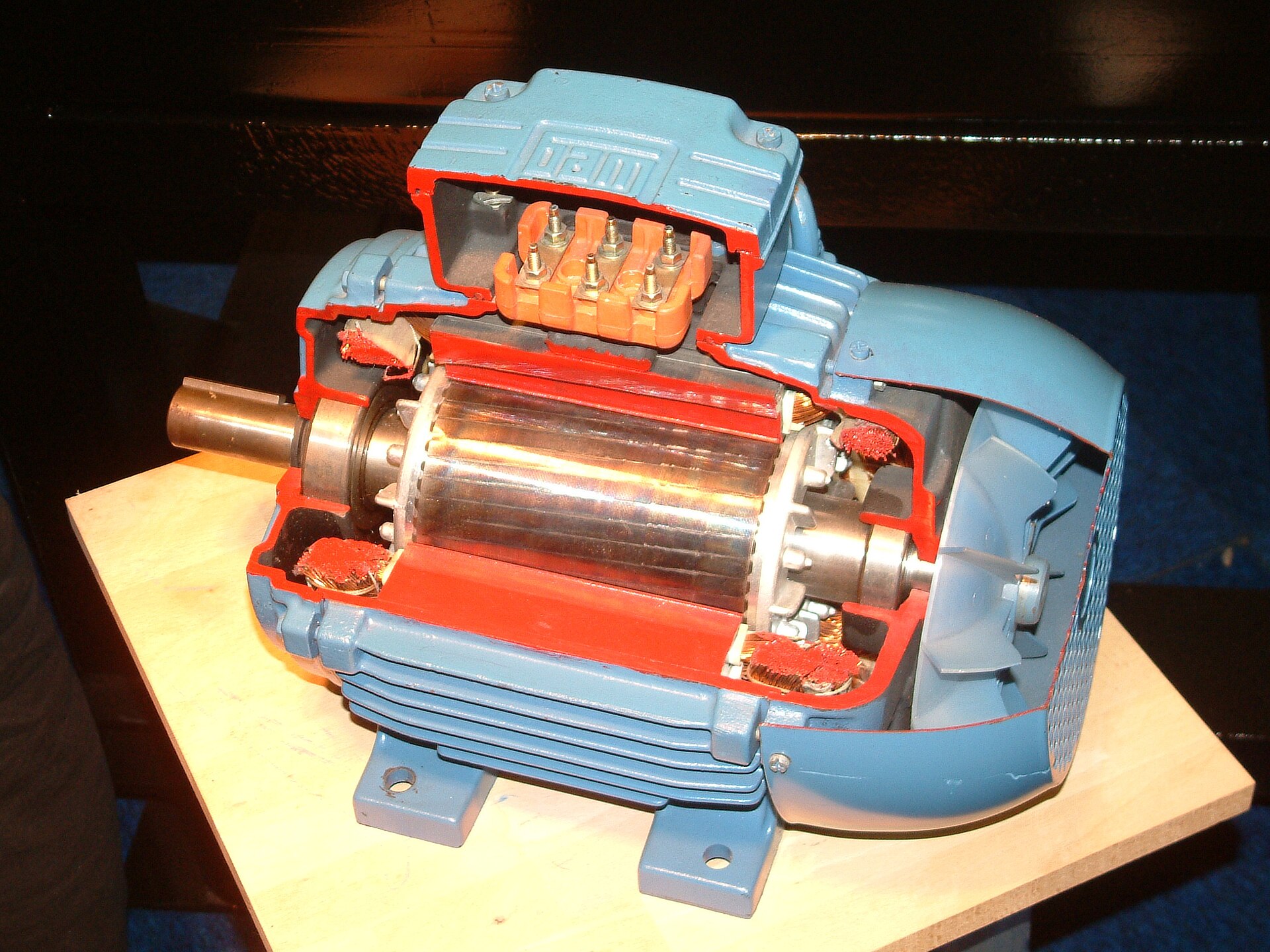
A mechatronics master's student posted on r/electricvehicles asking whether a system-level digital twin of an electric drivetrain, validated on a hardware platform, is a thesis that will hold up in industry or one that will sit on a shelf. The student wants to skip low-level field-oriented control and inverter design and focus on the system view. That instinct is correct, and it is also where the work gets harder, not easier.
What the industry already ships
System-level e-drive twins are not a research curiosity. They are a product. Siemens Simcenter sells exactly this: multi-domain models of motor, inverter, gearbox, thermal loop, and battery that talk to a vehicle model and a controller. AVL sells the same idea wrapped around its testbeds, with the plant model running fast enough to close the loop with a real ECU. dSPACE sells the hardware-in-the-loop rigs that make that closed loop possible at automotive timing. Every serious OEM and Tier 1 has some version of this stack in-house.
So when the student asks whether the topic is relevant, the honest answer is that the topic is so relevant that there is a multi-vendor commercial market for it. That is good news for employability and bad news for novelty. A thesis that rebuilds what Simcenter Amesim already does, in Simulink, on a benchtop motor, will be graded politely and forgotten.
Where the real gap sits
The gap is not in the equations. The motor, inverter, and thermal models are well understood and documented in textbooks and supplier white papers. The gap is in three places that the commercial tools handle badly or expensively.
First, parameter identification from a real machine that the student did not design. Most twins are built by the team that built the hardware. A twin that can be fit to a black-box e-axle from measurements alone, with quantified uncertainty, is genuinely useful.
Second, fidelity scheduling. A twin that runs at one fidelity is a model. A twin that swaps a high-fidelity inverter switching model in for a transient and an averaged model out for a drive cycle, automatically, is closer to what production teams actually need.
Third, validation discipline. Most academic digital twins are declared validated when a torque trace overlays a measurement at one operating point. Industry wants coverage statements: which operating regions, which transients, which thermal states, and what the residual error distribution looks like.
AutonomyEV's opinion
The Reddit poster has the right topic and the wrong framing. A system-level e-drive twin is industry-relevant in the same way that a CRUD web app is industry-relevant. The thesis that gets a job offer is the one that picks one of the three gaps above, ideally parameter identification on a drivetrain the student did not build, and treats the hardware rig as a validation instrument rather than the point of the exercise. The deliverable should be a method and an error budget, not a demo video. Supervisors will push toward the demo. The student should push back.
Source notes
- Master thesis in mechatronics, supports: Student proposes a system-level digital twin of an electric drivetrain validated on a hardware platform.
- Siemens Simcenter, supports: Commercial system-level simulation and digital twin tooling for electric powertrains.
- dSPACE, supports: Hardware-in-the-loop platforms used by OEMs and Tier 1s to validate e-drive controllers against plant models.
- AVL, supports: Model-based development and testbed integration for electrified powertrains.

Comments
Closed.
Comments close 30 days after a piece runs. The thread on this one is locked.
Tips and corrections still welcome at tips@autonomy-ev.com.