













Ferrari's First EV Faces a Design Problem It Cannot Outrun
Ferrari's first EV, the Luce, had one job: look like a Ferrari. Early reviews, an 8% stock drop, and an angry fan base suggest Maranello did not stick the landing.
Yair Knijn
Founder & editor-in-chief
- ferrari
- ev-design
- luxury-ev
- automaker-strategy
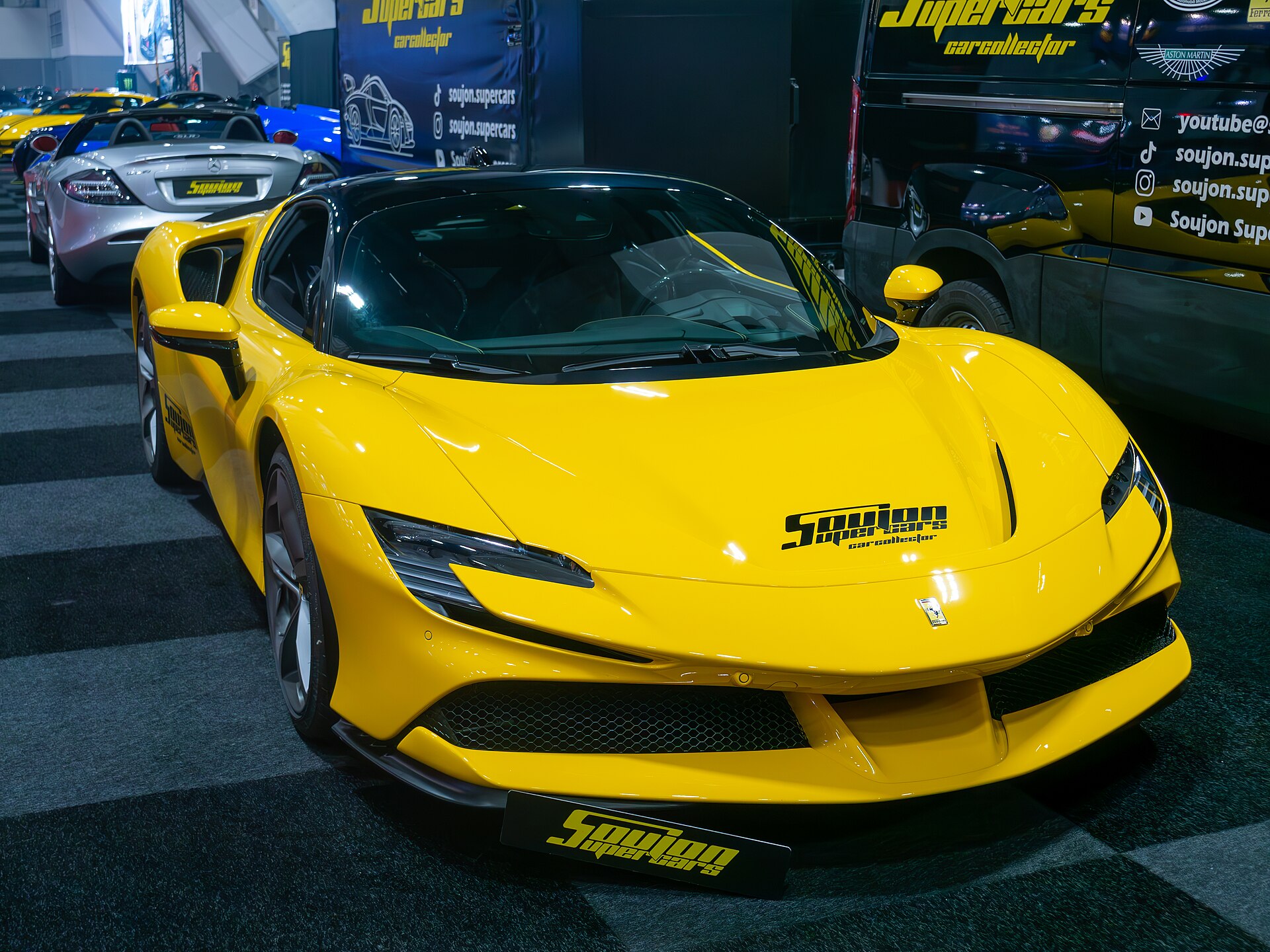
A brand that sold mystique first
For most of its history, Ferrari succeeded by being unavailable. The Verge's writeup of the new car argues that the first all-electric Ferrari, the Luce, arrived with the wrong silhouette for a brand whose entire pricing premium rests on how the car looks parked outside a restaurant.
The piece compares the design unfavorably to recent statements from competing luxury brands and reaches for the Jony Ive school of restraint as the wrong template for a company whose customers want presence. That is a harsh read, and it is not isolated. CNN reported that fans called the reveal "insulting" and likened the Luce to a Nissan Leaf. Forums, dealers, and the secondary market all price brand identity. When the identity drifts, the residuals follow.
Why this matters more than styling
Ferrari does not need volume. It needs to keep demand strong at the margins it currently runs, which it has done for decades by controlling supply and protecting the visual grammar of every model. The financial market read the reveal quickly. Fortune noted that Ferrari shares dropped as much as 8% after the unveiling, wiping billions off market value, while former chairman Luca di Montezemolo warned the car risks "destruction of a myth." That is a sharper, more immediate signal than any styling debate in isolation.
An EV breaks several Ferrari defaults at once. There is no V12 sound, and no exhaust geometry to anchor the rear. The proportions of a skateboard battery do not match the proportions of a mid-engine GT. Maranello has to invent a new visual vocabulary for an electric flagship, and The Verge's review argues the first attempt reads closer to generic high-end product than to anything in Ferrari's recent lineage. InsideEVs put the technical case in plain terms: four motors, 1,035 hp, roughly 329 miles of range, and a price tag around $640,000, on a body that "looks like no Ferrari before it."
This is also a brand problem with operational consequences. A Ferrari that does not look like a Ferrari in photos travels badly on social feeds and gets compared to cheaper cars in side-by-sides. Waitlist customers may defer instead of allocate. None of those effects show up in a press release. All of them show up in residual values and in the willingness of long-time clients to take the next allocation.
AutonomyEV's opinion
The first Ferrari EV does not have to outsell anything. It has to convince existing Ferrari buyers that an electric Ferrari is still a Ferrari. On the evidence of the reveal so far, that argument is unfinished.
Two things to watch. First, whether Ferrari restages the public debut with a revised exterior package or a track variant that resets the visual story before deliveries begin. Maranello has done quiet design corrections before, and it has the dealer network and the press cycle to make a second impression land. Second, whether the stock reaction after CNN's reporting on the May 25 unveiling marks a short pullback or a sustained reassessment of how investors price Ferrari's electric pivot.
The bet against Ferrari has historically been a bad bet. The brand is patient, the customer list is captive, and the company has time to revise. This is the first product cycle in a generation where the design itself is the story, and so far the design is losing the argument.


Comments
Closed.
Comments close 30 days after a piece runs. The thread on this one is locked.
Tips and corrections still welcome at tips@autonomy-ev.com.