













XPeng MONA M03 Resets the Floor on L2++ Pricing
A sub-160,000 yuan sedan with an urban assisted driving trim forces every rival to explain why their stack costs twice as much in China.
Yair Knijn
Founder & editor-in-chief
- xpeng
- l2++
- adas
- china
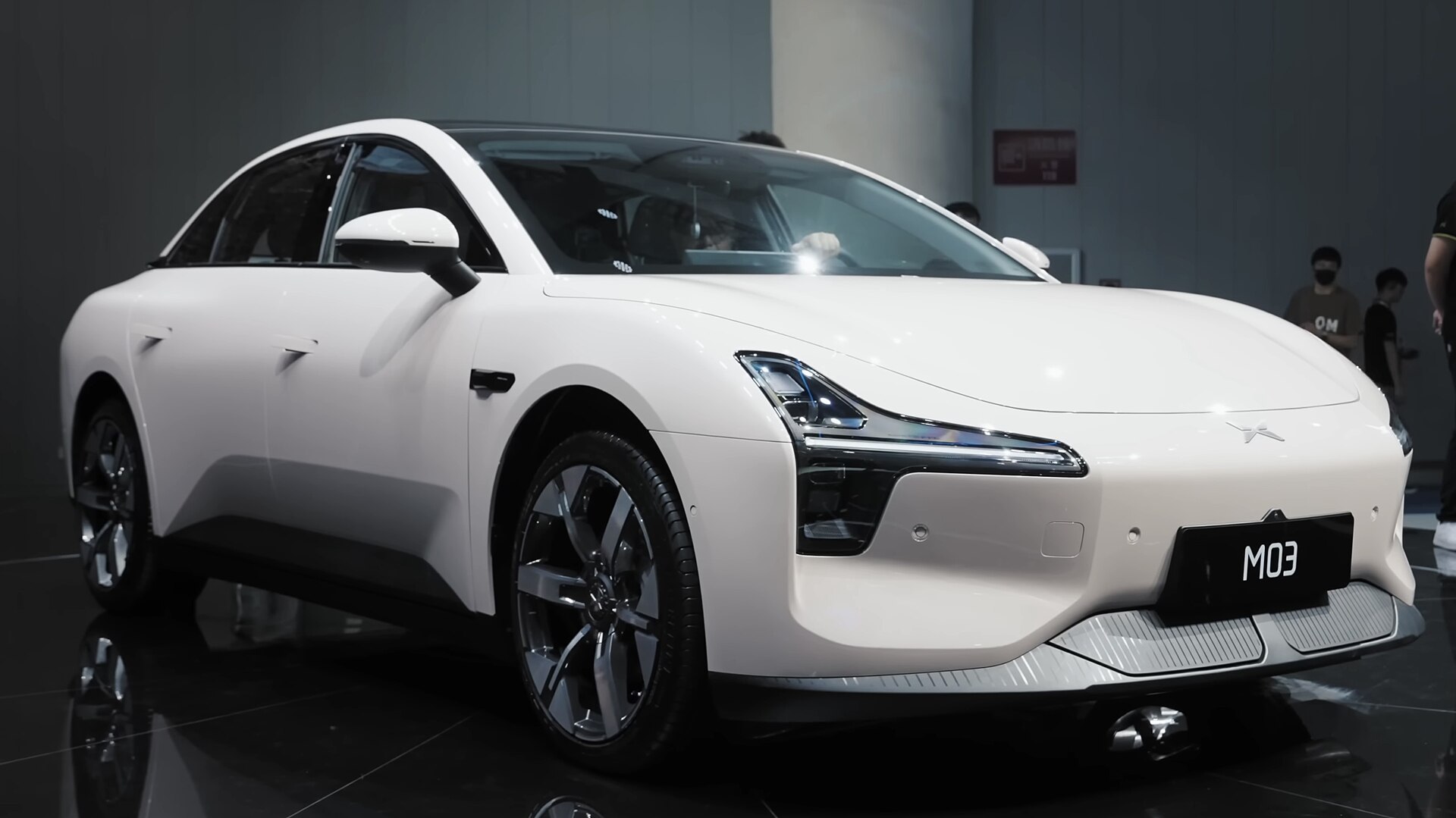
XPeng's MONA M03 Max is the cheapest car on sale in China that ships an urban assisted driving stack. That is the story, and every product planner in Shanghai, Wolfsburg, and Fremont should be reading the spec sheet this week.
What XPeng actually shipped
The MONA M03 launched in August 2024 starting at 119,800 yuan, with Reuters reporting in XPeng launches new budget EV MONA M03 to take on BYD, Tesla that the lineup tops out near 155,800 yuan and that MONA originated as a project tied to ride-hailing operator Didi before XPeng took it over. The cheap trims are conventional L2 with adaptive cruise and lane centering. The interesting one is the Max trim, which CnEVPost covered when XPeng confirmed it carries XNGP, the same urban pilot the company ships on the G6 and G9, with door-to-door navigation on mapped city roads. The Max trim sits around 155,800 yuan, roughly 21,500 US dollars at current rates. No Western sedan offers comparable assisted driving capability at anything close to that price.
Why this is the new floor
The r/autonomyev thread makes the point bluntly: once a Chinese OEM ships urban assisted driving on a 22,000 dollar sedan, every competitor selling a 40,000 dollar car with highway-only lane keeping has a pricing problem. The hardware bill is no longer the constraint. Two Orin-X chips and a camera suite cost what they cost. The constraint is the software stack and the data flywheel, and XPeng already built both for its premium cars.
The MONA program, per Reuters, was engineered around a ride-hail cost target before XPeng's perception and planning software was layered on top. The marginal cost of adding XNGP to a car that already carries the compute is small.
Regulatory caveat
XNGP as described by CnEVPost is a mainland-China feature operating on mapped Chinese roads under Chinese type approval. Nothing in the public record implies homologation in the EU or US, and the price comparison below should be read as a manufacturing and software-cost benchmark, not a claim that the same feature would clear NHTSA or UNECE approval tomorrow.
AutonomyEV's opinion
The Western response so far has been to argue that Chinese L2++ is not as good as it claims, or that regulatory regimes will keep these systems out of Europe and the US for years. Both are partly true and neither is a strategy. The Volkswagen-XPeng partnership and the Stellantis-Leapmotor deal exist because the incumbents already concluded they cannot match this cost structure on their own. Expect more licensing announcements before the next Munich show. The 22,000 dollar urban-pilot sedan is now the benchmark for cost, and the question for every other automaker is which line item they cut to meet it.



Comments
Closed.
Comments close 30 days after a piece runs. The thread on this one is locked.
Tips and corrections still welcome at tips@autonomy-ev.com.